ForbiddenPast
Deeper
Three categories of forbidden evidence. Stones that shouldn’t exist and ancient texts that describe things they have no business knowing. A map of reality’s hidden layers that Kabbalists, Gnostics, and Vedic sages all drew independently. And claims about consciousness the mainstream refuses to touch. The physical world the established story quietly walks around.
The Forbidden, Told Three Ways
The stuff mainstream archaeology and science don’t want to touch doesn’t share a conspiracy. It shares a shape. Impossible stonework on every continent. Ancient texts describing things the people writing them had no business knowing. A map of reality’s hidden layers that keeps getting redrawn by people who had no way to compare notes. A view of consciousness the standard materialist model has no room for. Any one of these you can wave away. Put them together and a story the textbooks never tell starts to show up.
Part I — The Stones
The Builders
Megalithic Mysteries
Structures that sit flat against the expected timeline of what humans should have been able to do.
Turkey · ~9,600 BCE
Göbekli Tepe
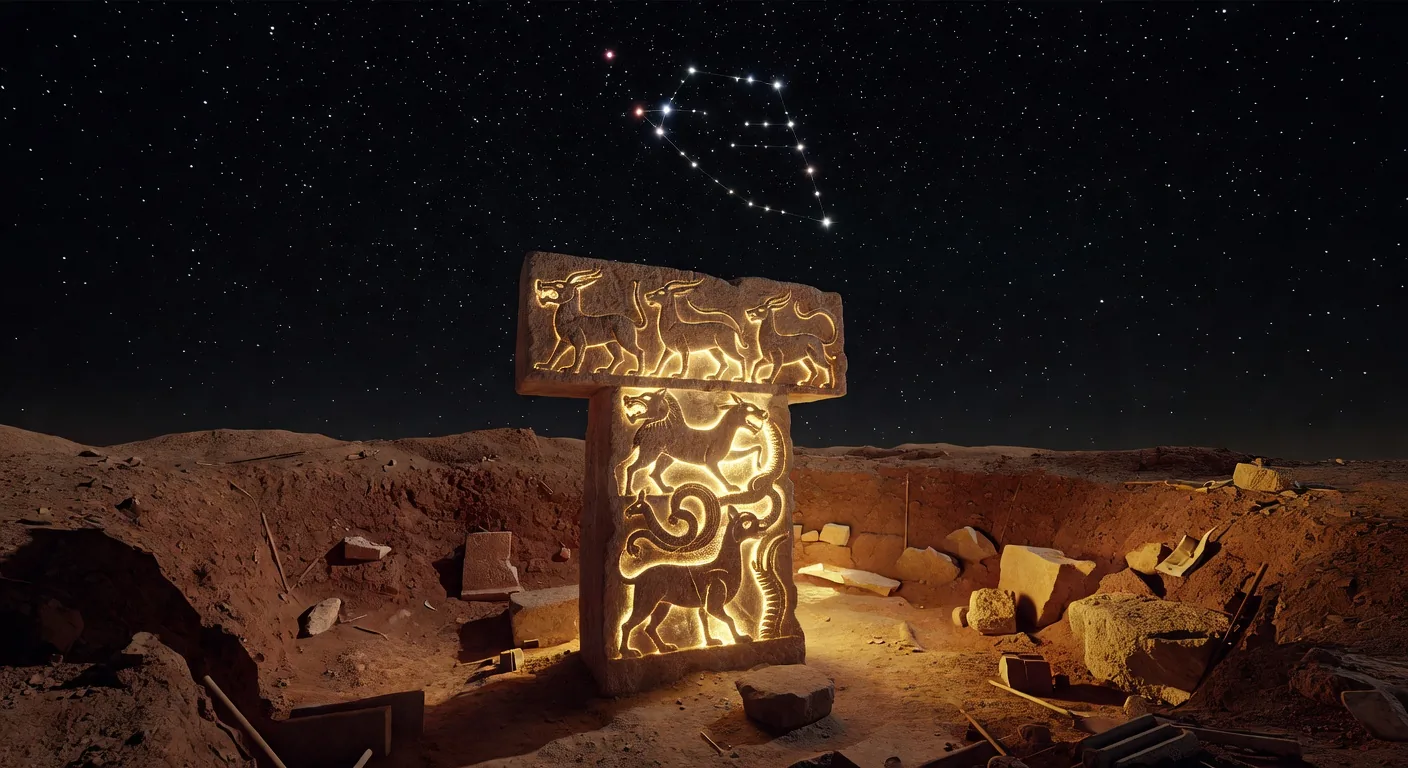
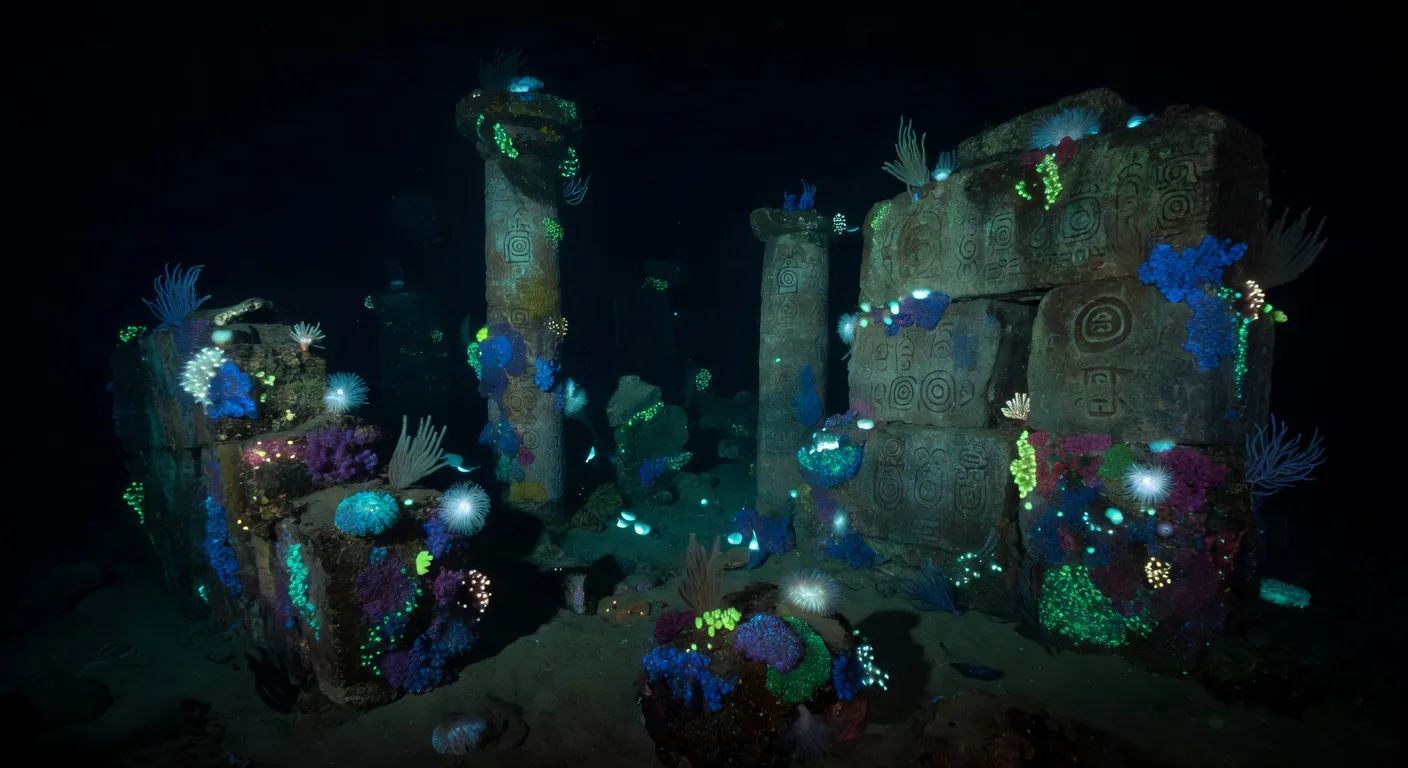
Built around 9,600 BCE — right after the Younger Dryas catastrophe — and deliberately buried around 8,000 BCE. Twelve thousand years old, seven thousand older than Stonehenge. Carved T-shaped pillars weighing up to 20 tons, covered in precise animal reliefs. Mainstream archaeology says hunter-gatherers built it. The tolerances say otherwise.
Egypt · ~2560 BCE (officially)
The Great Pyramid
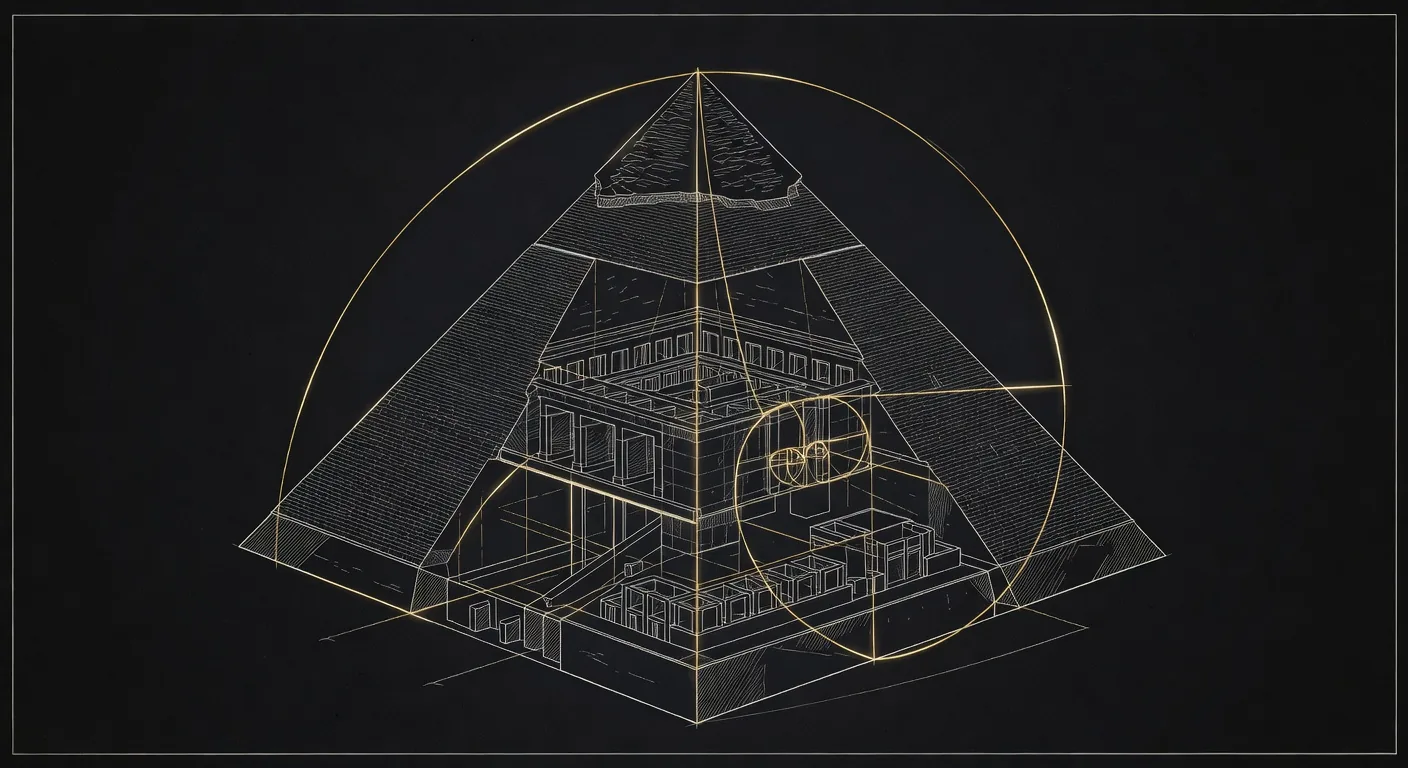
Aligned to true north within 1/15th of a degree. Base dimensions encode the circumference of the Earth. Perimeter divided by height equals 2π. The golden ratio turns up in its proportions.
2.3 million blocks averaging 2.5 tons each, with some of the internal granite weighing up to 80 tons. Mainstream explanation: copper tools and wooden sledges. That explanation does a lot of work it has not yet earned.
Egypt · possibly ~10,500 BCE
The Sphinx
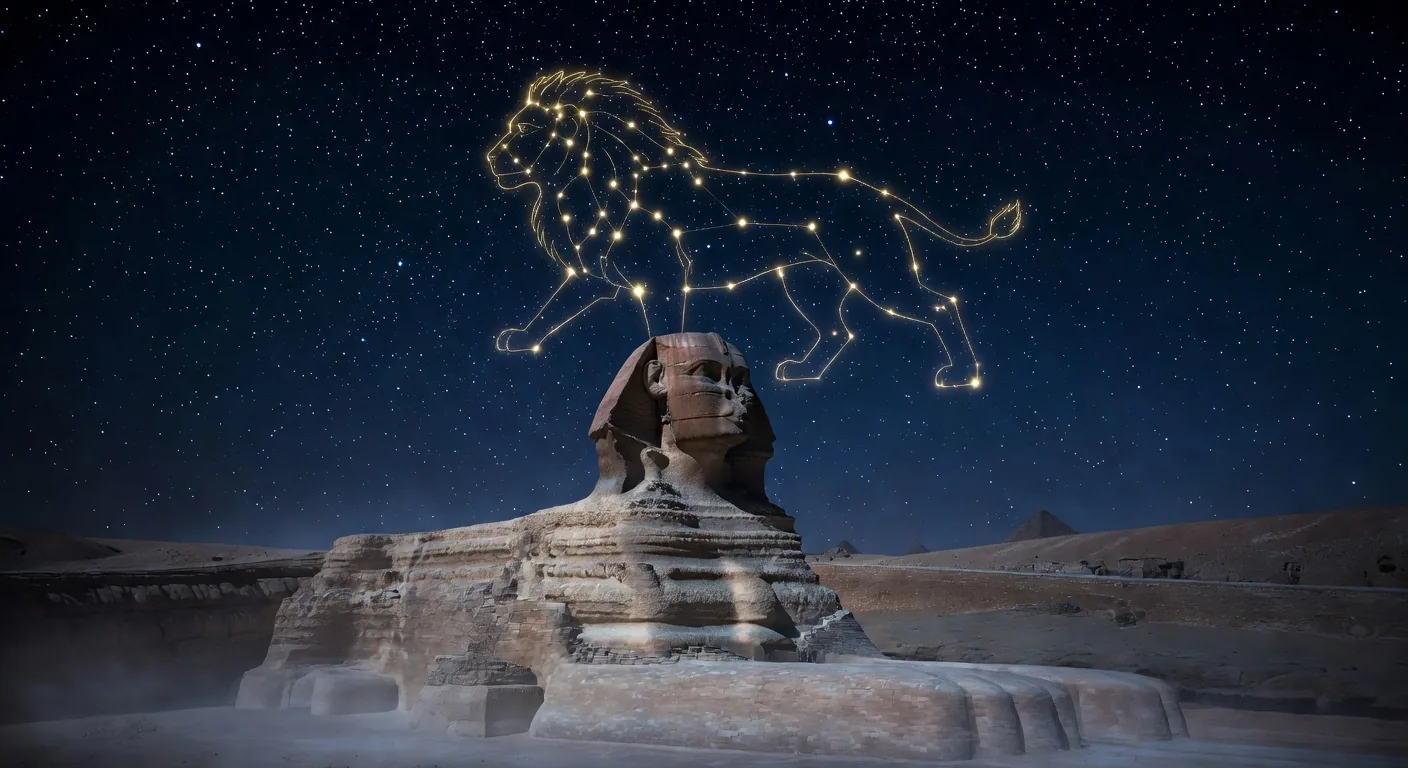
Geologist Robert Schoch documented vertical water-erosion patterns on the enclosure walls that require thousands of years of heavy rainfall — conditions that last existed in Egypt before around 7,000 BCE. John Anthony West pushed the dating further, to the Age of Leo around 10,500 BCE, when a lion-shaped Sphinx would have looked due east at the lion constellation on the spring equinox. Mainstream Egyptology still dates it to Khafre, around 2500 BCE. The rock says something else.
Global · Pre-flood era
Underwater Ruins
Submerged megalithic structures have been found off Japan (Yonaguni), India (Dwarka), Egypt (Thonis-Heracleion), and across the Mediterranean. Sea levels rose about 120 metres after the last ice age, which means a strip of coastline the size of Europe is now ocean floor. Most of it has never been properly surveyed.
Sources & Further Reading
- Klaus Schmidt — "Göbekli Tepe: A Stone Age Sanctuary" (2012) — primary excavation report by the original archaeologist
- Robert Schoch — "Voices of the Rocks" (1999) — geological case for water erosion on the Sphinx
- John Anthony West — "Serpent in the Sky" (1979) — the original Sphinx redating hypothesis
- Yonaguni Monument — Wikipedia overview — geological and archaeological debate on the underwater structure
- Franck Goddio — Thonis-Heracleion excavation — the sunken Egyptian port city rediscovered in 2000
The Flower of Life
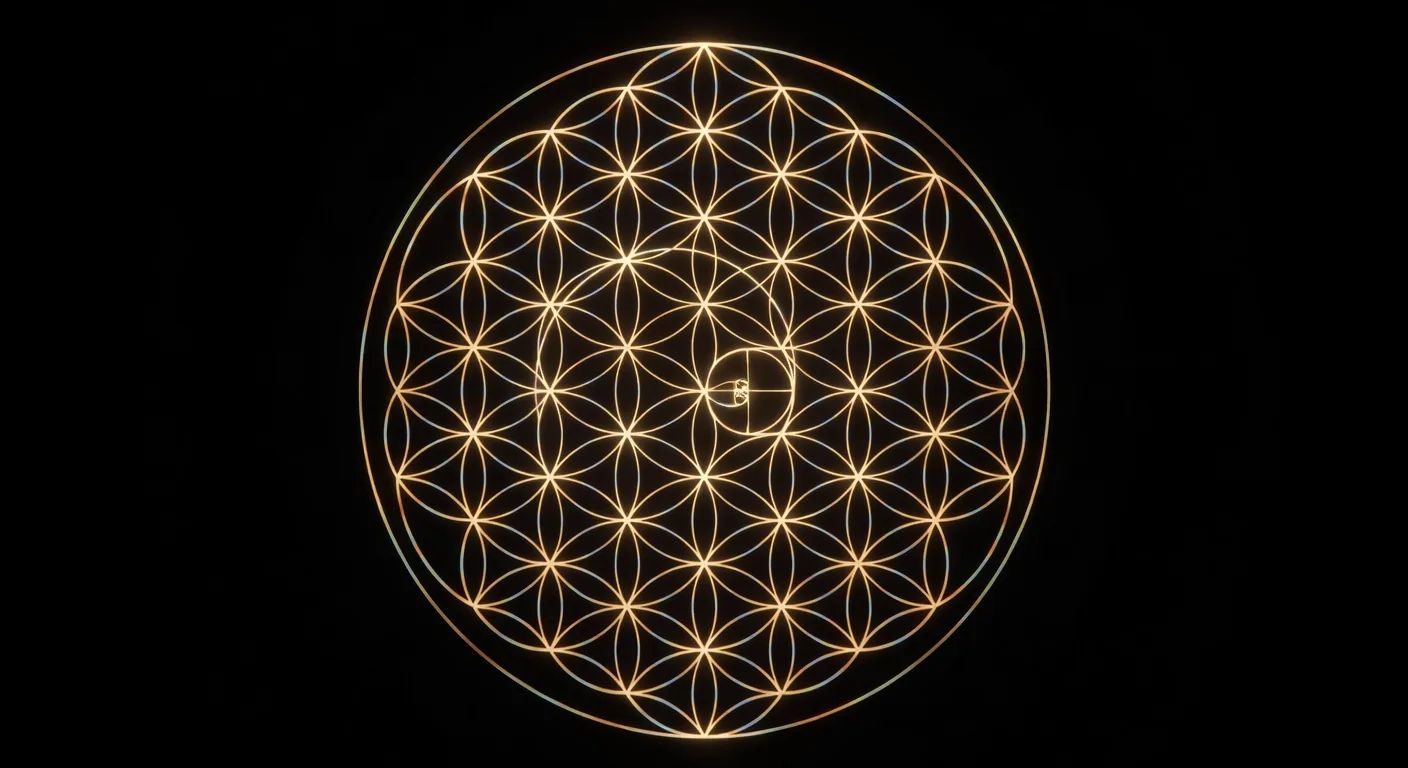
Found in temples from Egypt to China to Ireland. Not decoration — a mathematical map of how space organizes itself.
The Golden Ratio (φ = 1.618...)
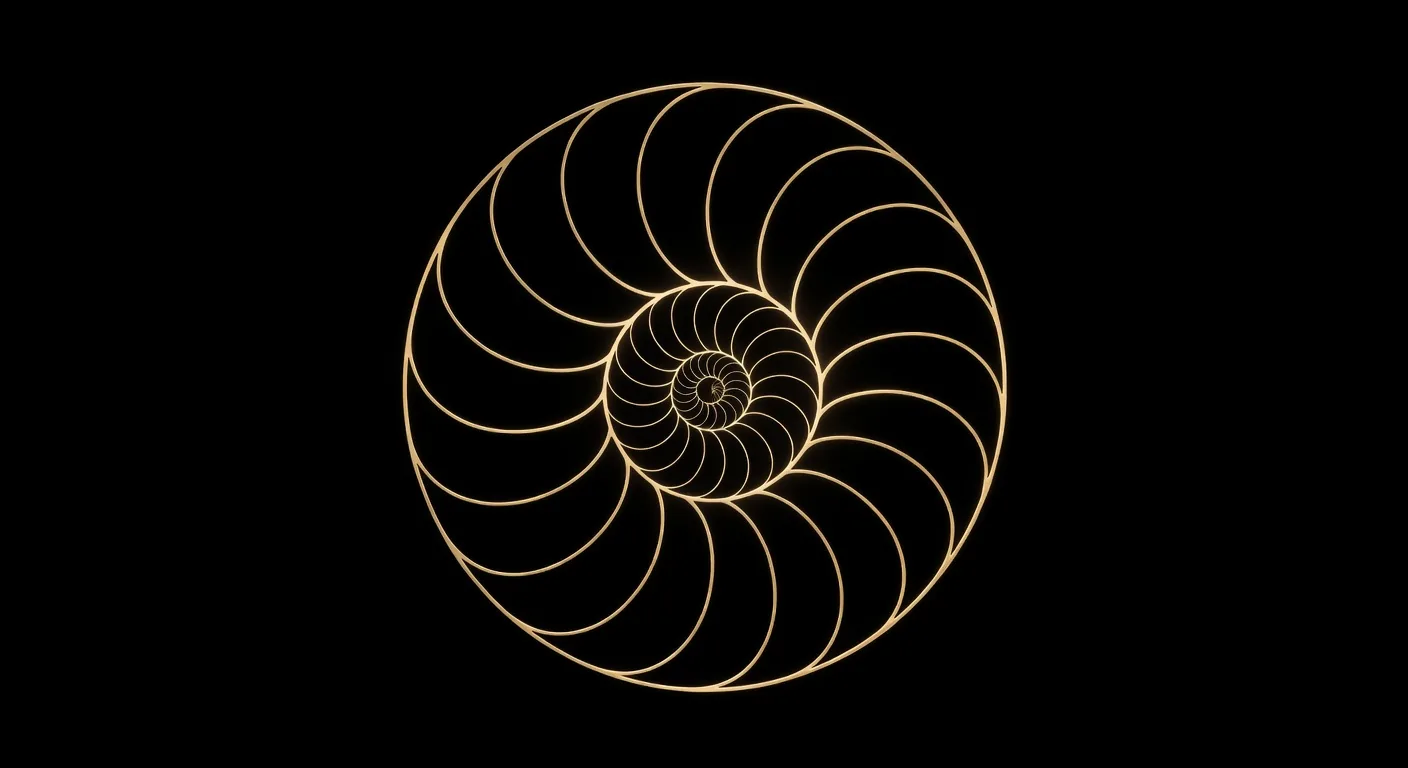
Appears in DNA, galaxies, hurricanes, sunflower seeds, and the proportions of the Great Pyramid. Nature’s favorite number.
Metatron’s Cube
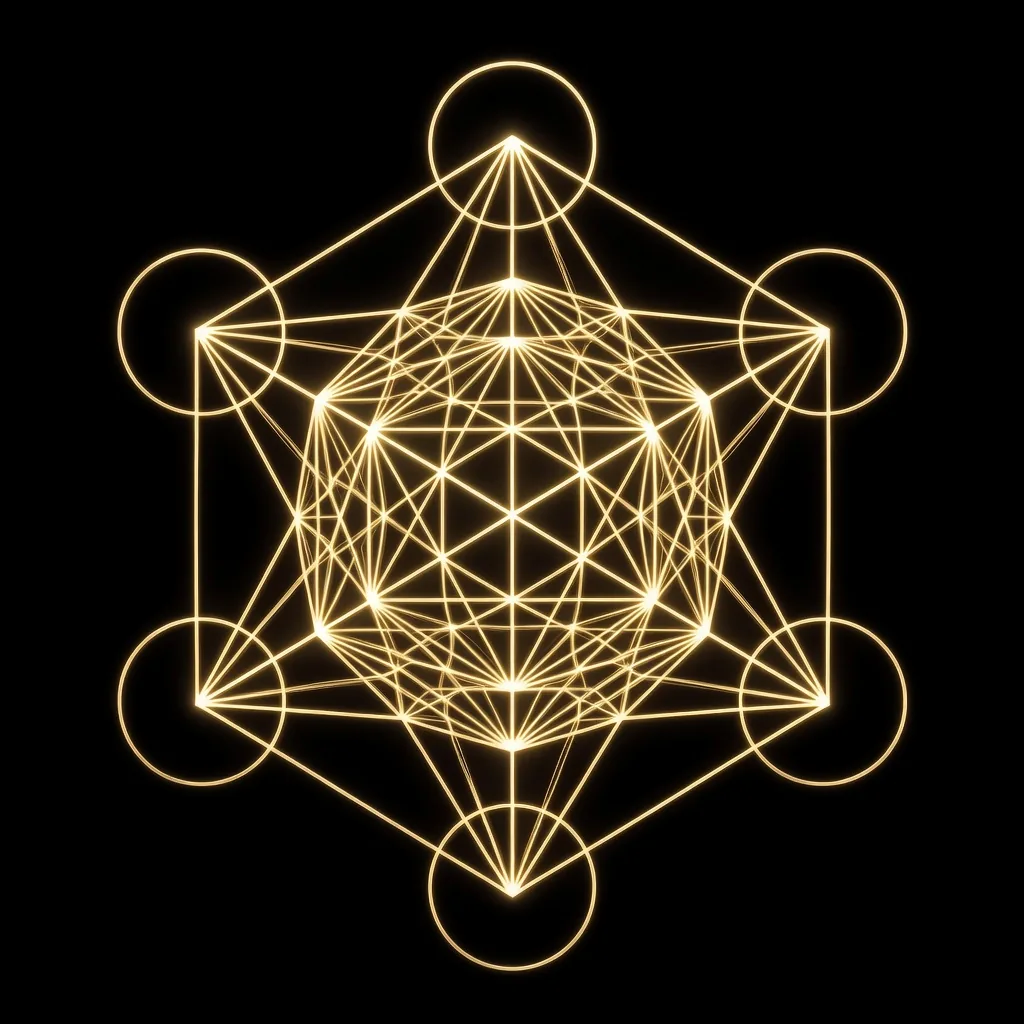
Contains all five Platonic solids — the only possible regular 3D shapes. The building blocks of physical reality.
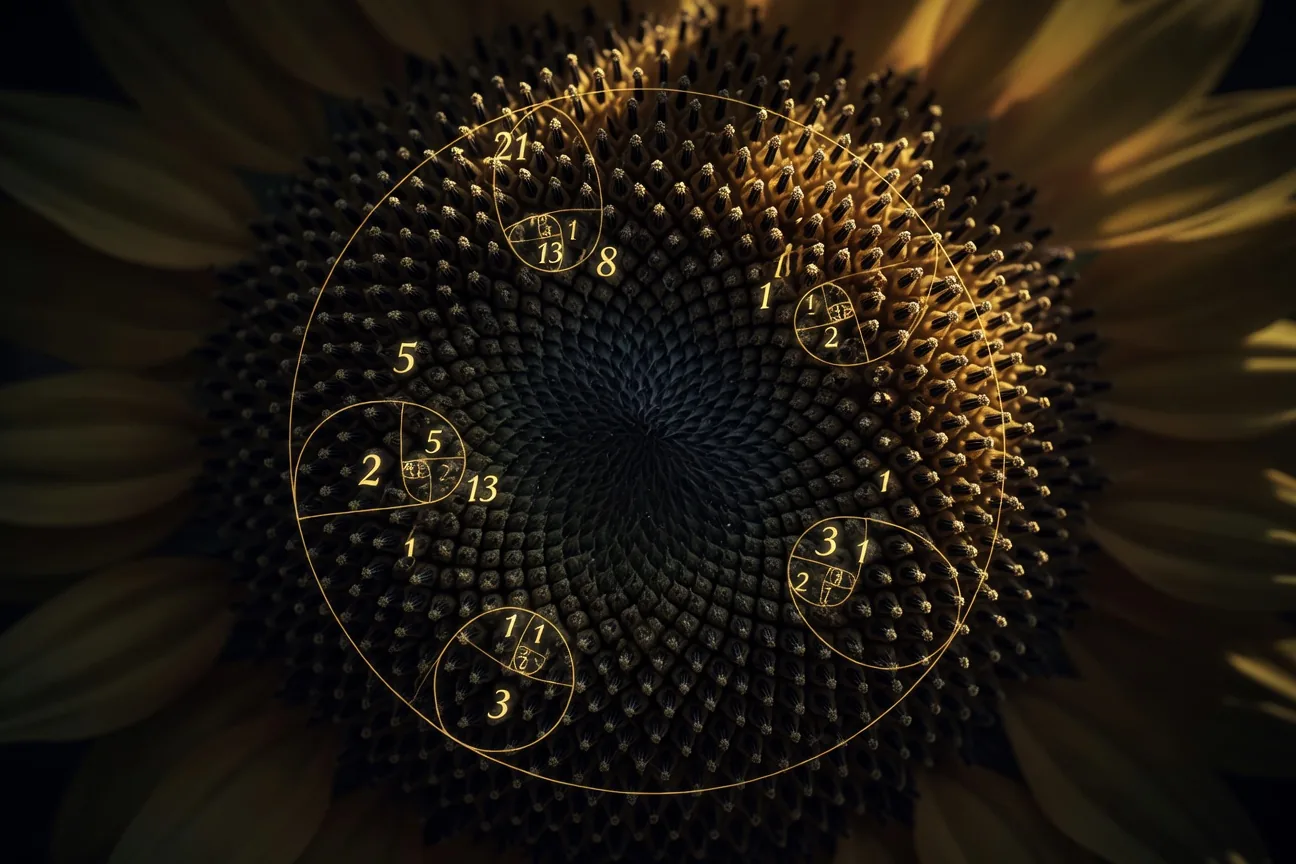
The Fibonacci Sequence
1, 1, 2, 3, 5, 8, 13, 21, 34... Each number is the sum of the previous two. The ratio approaches φ. This sequence appears everywhere in nature.
The Hidden Blueprint
The Flower of Life & Sacred Mathematics
The same geometric pattern shows up carved in stone on six continents. It was not invented in parallel. It was discovered — and then encoded into temples, manuscripts, and mathematical traditions by cultures that had no contact with each other.
The Pattern
Found on Six Continents
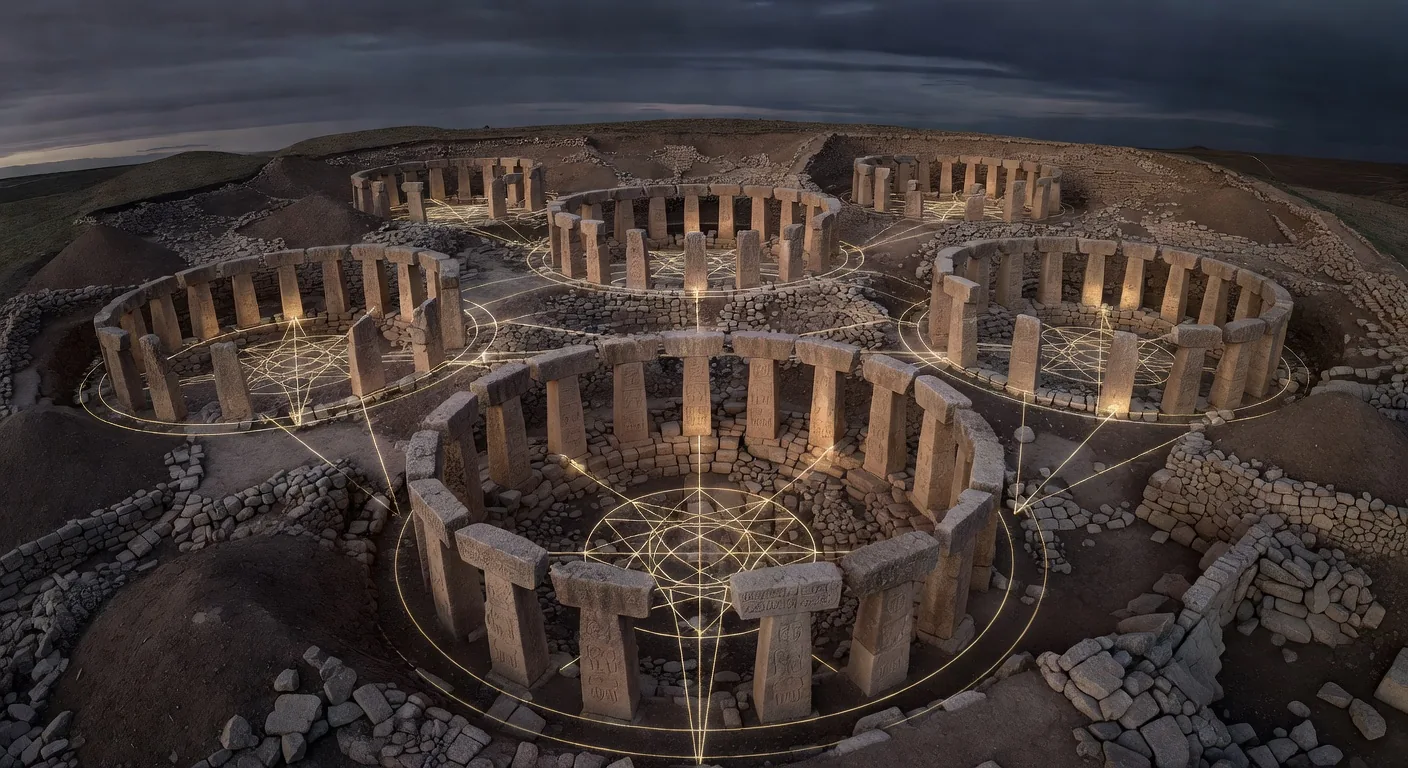
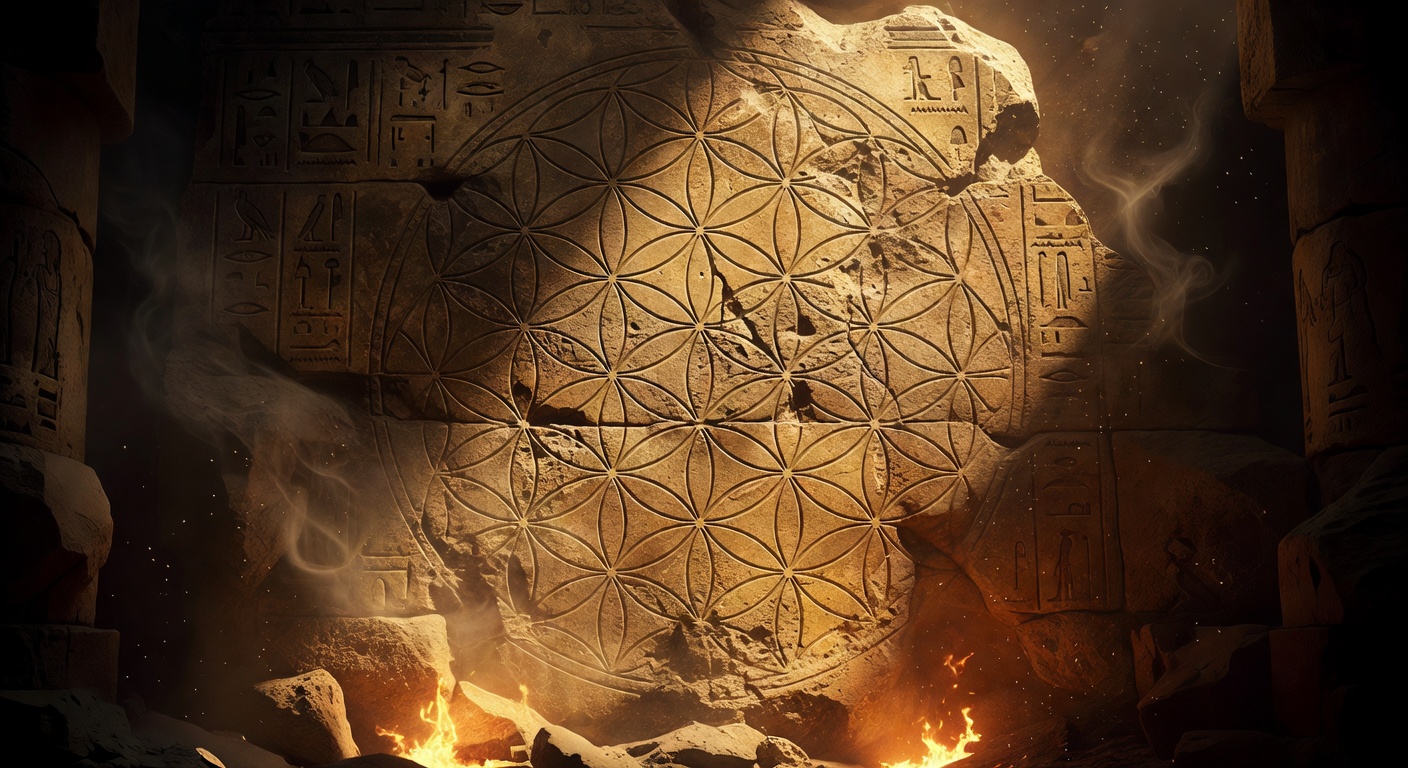
The Flower of Life is a figure of nineteen overlapping circles in sixfold symmetry. It was carved into the granite pillars of the Osirion at Abydos — a structure so old that Seti I built his own temple on top of it. The same pattern turns up at the Forbidden City in Beijing, the Golden Temple at Amritsar, at Ephesus in Turkey, at Masada in Israel, and on stone surfaces in Romania, Bulgaria, and Ireland.
These cultures had no documented contact. There is no transmission chain on record. The diagram is nevertheless identical — not similar, not thematically related, but geometrically the same to within the tolerance of hand-carving. The mainstream reading is independent discovery. The alternative — that this specific figure is the trace of a shared knowledge tradition older than any of the cultures preserving it — is rarely discussed, because the implications are uncomfortable.
The Origin
Vesica Piscis — The Mother Shape
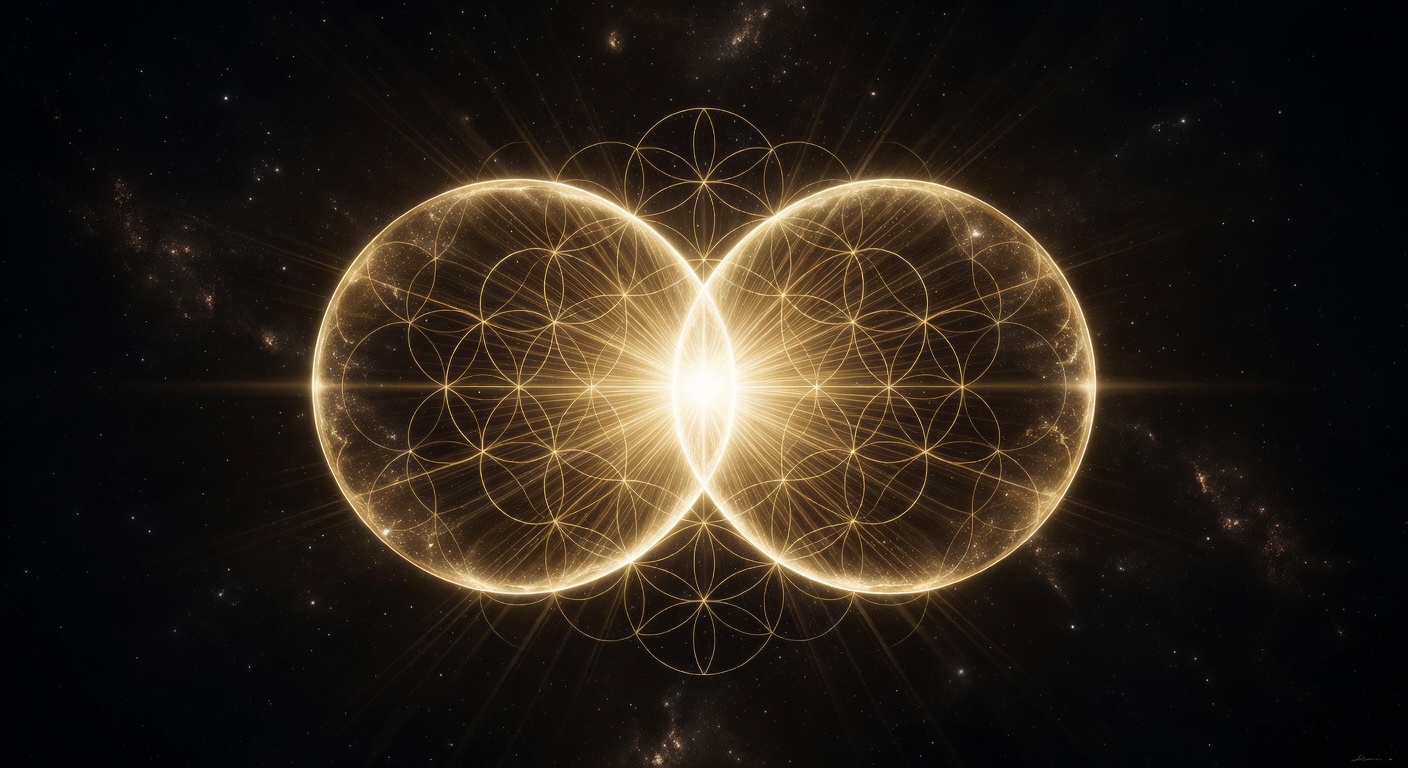
Draw one circle. Draw a second circle centred on the edge of the first. The almond-shaped intersection is the Vesica Piscis, and from this one operation the whole of sacred geometry unfolds. The ratio of the Vesica’s height to its width is √3, an irrational the Pythagoreans considered sacred. The same shape appears in Gothic cathedral windows, Hindu yantras, early Christian iconography (the “Jesus fish”), and Masonic symbolism.
Keep going — put new circles on each intersection point — and the Seed of Life emerges: seven circles in perfect symmetry. Keep going further and you get the Flower of Life. Keep going further still, and the lines connecting every centre produce Metatron’s Cube. The entire system grows from one circle and one compass width. No measurement, no ruler, no number system required. Just a compass. Whoever did this first figured that out.
The Building Blocks
Five Shapes That Build Reality
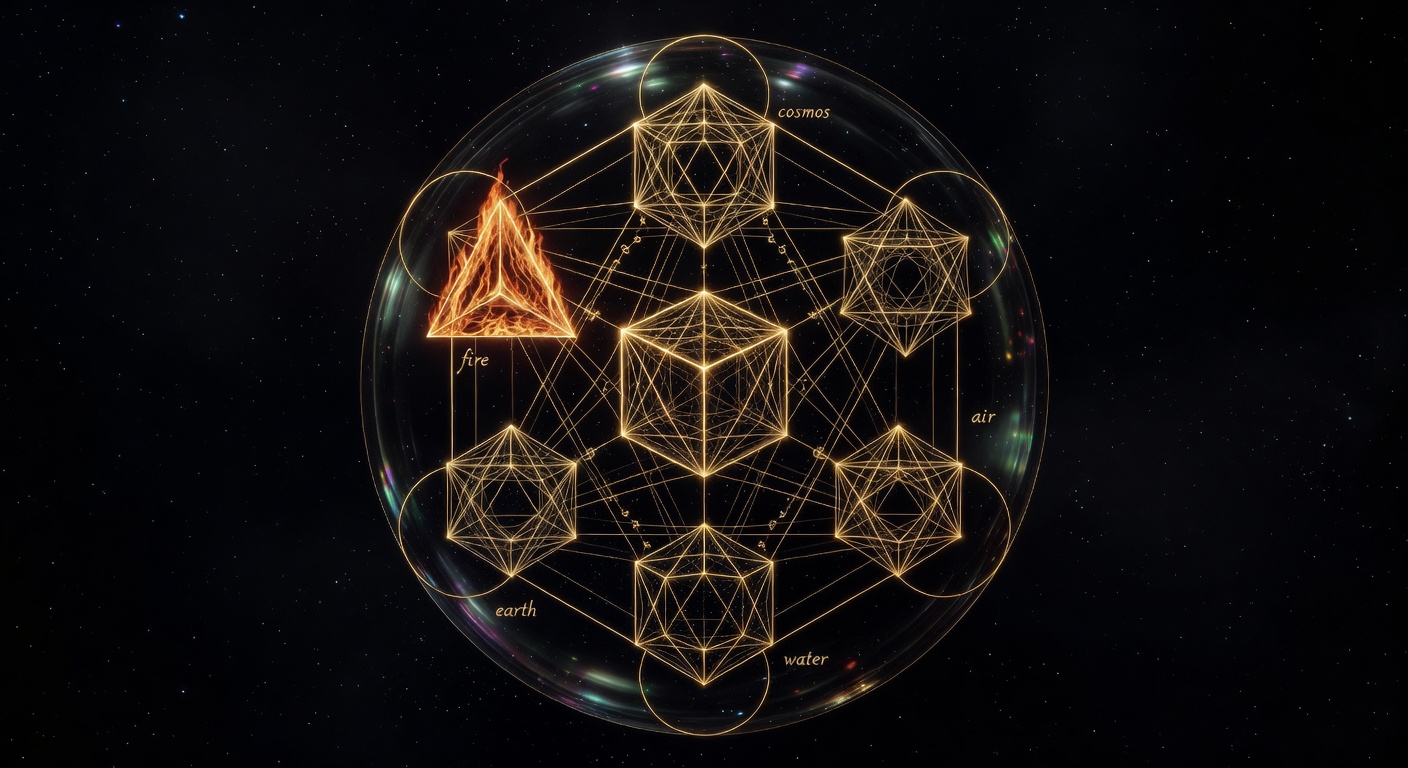
There are exactly five regular convex polyhedra — three-dimensional shapes where every face, edge, and vertex is identical. Not roughly five. Exactly five. This is a mathematical proof, not an opinion. Plato mapped them to the classical elements: tetrahedron (fire), cube (earth), octahedron (air), icosahedron (water), dodecahedron (the cosmos itself).
All five fall out of Metatron’s Cube, which is itself derived from the Flower of Life. Modern chemistry has since confirmed what Plato intuited: molecular geometry is built from these shapes. Diamond crystallises as tetrahedra. Salt forms cubes. Water ice forms hexagonal lattices. Many viruses are perfect icosahedra. The Platonic solids are not philosophical metaphors — they are the literal architecture of matter at the molecular scale.
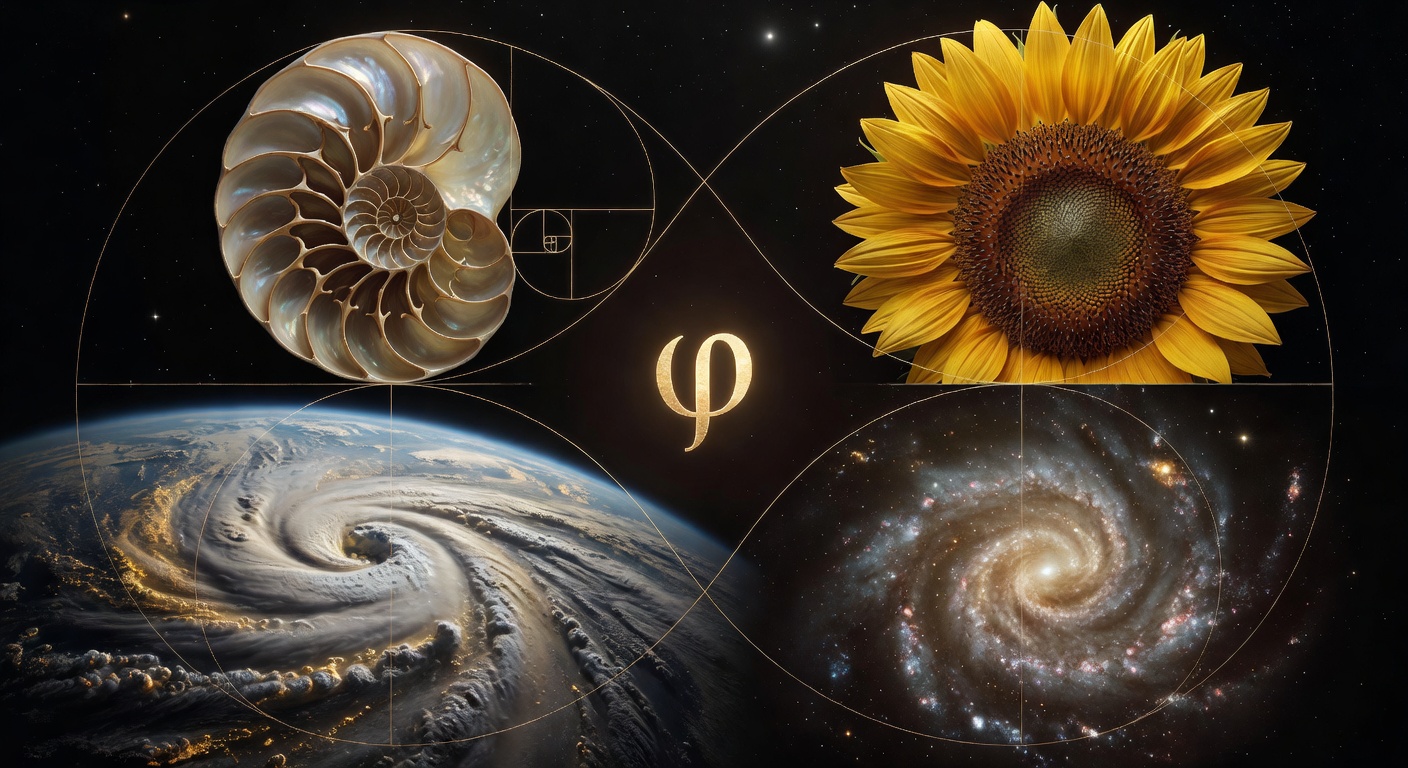
The Number
φ = 1.6180339887... — Nature’s Signature
The golden ratio is the number that emerges whenever you divide a line so that the whole is to the larger part as the larger part is to the smaller. It is irrational, algebraic, and measurable everywhere in nature:
Biology
DNA & Growth Patterns
The DNA double helix measures 34 angstroms long by 21 wide. 34/21 = 1.619... consecutive Fibonacci numbers converging on φ. Leaf phyllotaxis, branching patterns in trees and lungs, the spiral arrangement of seeds — all governed by the same ratio.
Cosmology
Galaxies & Hurricanes
Spiral galaxies and hurricanes trace logarithmic spirals whose growth factor approximates φ. The same curve governs the nautilus shell at centimeter scale and the Milky Way at 100,000-light-year scale. Scale-invariant mathematics.
Mathematics
Fibonacci Convergence
1, 1, 2, 3, 5, 8, 13, 21, 34, 55, 89... each number is the sum of the two before it. Divide any term by its predecessor: 89/55 = 1.6181... The ratio converges on φ. Fibonacci described this in 1202, but Indian mathematicians documented it centuries earlier.
Quantum Physics
The Golden Ratio in Atoms
In 2010, Coldea et al. at the Helmholtz-Zentrum Berlin found the golden ratio in the magnetic resonance of cobalt niobate atoms at near absolute zero. φ appears to be woven into the quantum fabric of matter itself.
One number — not invented by humans, found by them — running through everything from DNA to galaxies.
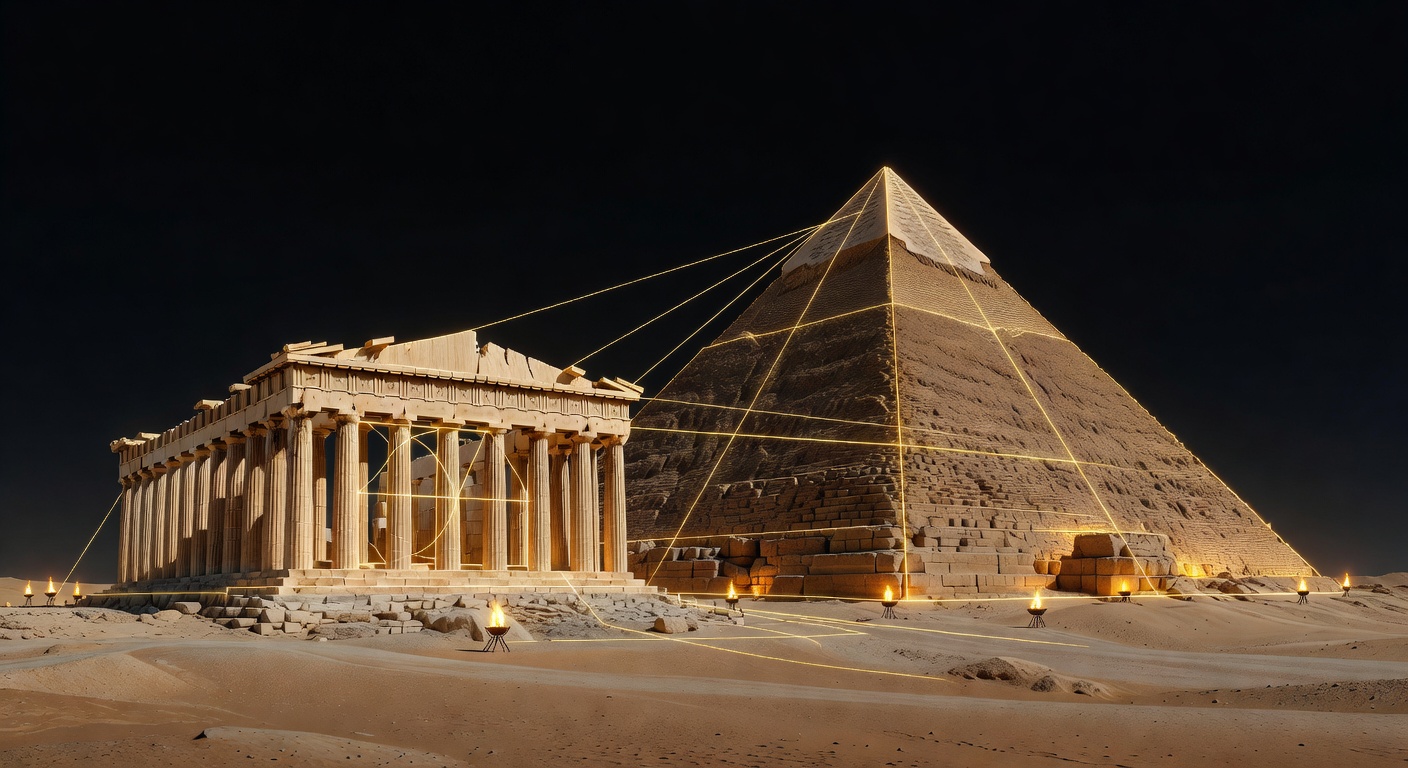
The Builders
The Ancient Architects Knew
The Great Pyramid of Giza encodes φ in its cross-section: the slant height divided by half the base is 1.618. The Parthenon’s facade fits a golden rectangle. Chartres Cathedral’s nave, the layout of Angkor Wat, the proportions of Hindu temple vimanas — all encode the same ratio. These structures were built by civilisations separated by thousands of miles and thousands of years.
The standard explanation is convergent discovery: every advanced civilisation eventually finds φ because it produces aesthetically pleasing proportions. Possibly. But the specific combination — Flower of Life, Platonic solids, and φ encoded together in megalithic architecture — suggests what was being passed down was not just a number, but a complete mathematical system. The open questions are how far back that system goes, and who taught it first.
The Honest Position
What We Can Actually Say
The mathematics is not debatable. φ appears in nature. The Fibonacci sequence converges on it. The Platonic solids are the only regular polyhedra. The Flower of Life generates all of these from a single compass operation. These are proofs, not interpretations. Where the mainstream and alternative camps diverge is on the implications.
The mainstream reading: sacred geometry is the human brain finding shapes in clouds — we see φ everywhere because we’re looking for it, and ancient builders used nice proportions because they looked nice. The alternative reading: the same diagram shows up on six continents, φ is encoded into megalithic buildings that predate recorded history, and that points to a math tradition older than any civilisation we can name.
Our working position: the geometry is real, the math is proven, the ancient carvings exist. Whether they’re independent discovery or inherited from an earlier source is the open question — because the carvings don’t explain themselves, and nobody has a convincing answer for why the exact same diagram shows up at Abydos, Amritsar, and the Forbidden City.
The same diagram on six continents — and the quantum experiment that found phi in 2010
Euclid proved exactly five Platonic solids exist. Indian mathematicians documented Fibonacci centuries before Fibonacci. Coldea et al. found the golden ratio in quantum spin chains. The full deep dive with named figures and real scholarly pushback.
Rabbit hole detected
Deep dive →Sources & Further Reading
- Flower of Life — Wikipedia — geometric description and historical appearances
- Vesica Piscis — Wikipedia — mathematical properties of the mother shape
- Platonic Solids — Wikipedia — proof that exactly five regular polyhedra exist, from Plato's Timaeus to modern mathematics
- Coldea et al. — "Quantum Criticality in an Ising Chain" (Science, 2010) — golden ratio discovered in cobalt niobate quantum states
- The Osireion at Abydos — Wikipedia — the ancient subterranean structure where the Flower of Life was carved
The Ancient Texts
The Vimanas & Ancient Flight
The two great Sanskrit epics contain dozens of detailed references to flying vehicles — aerial chariots, flying cities, weapons of mass destruction. The texts are real. The descriptions are specific. Whether they describe real technology, preserved memory, or mythological imagination is a question nobody has cleanly settled.
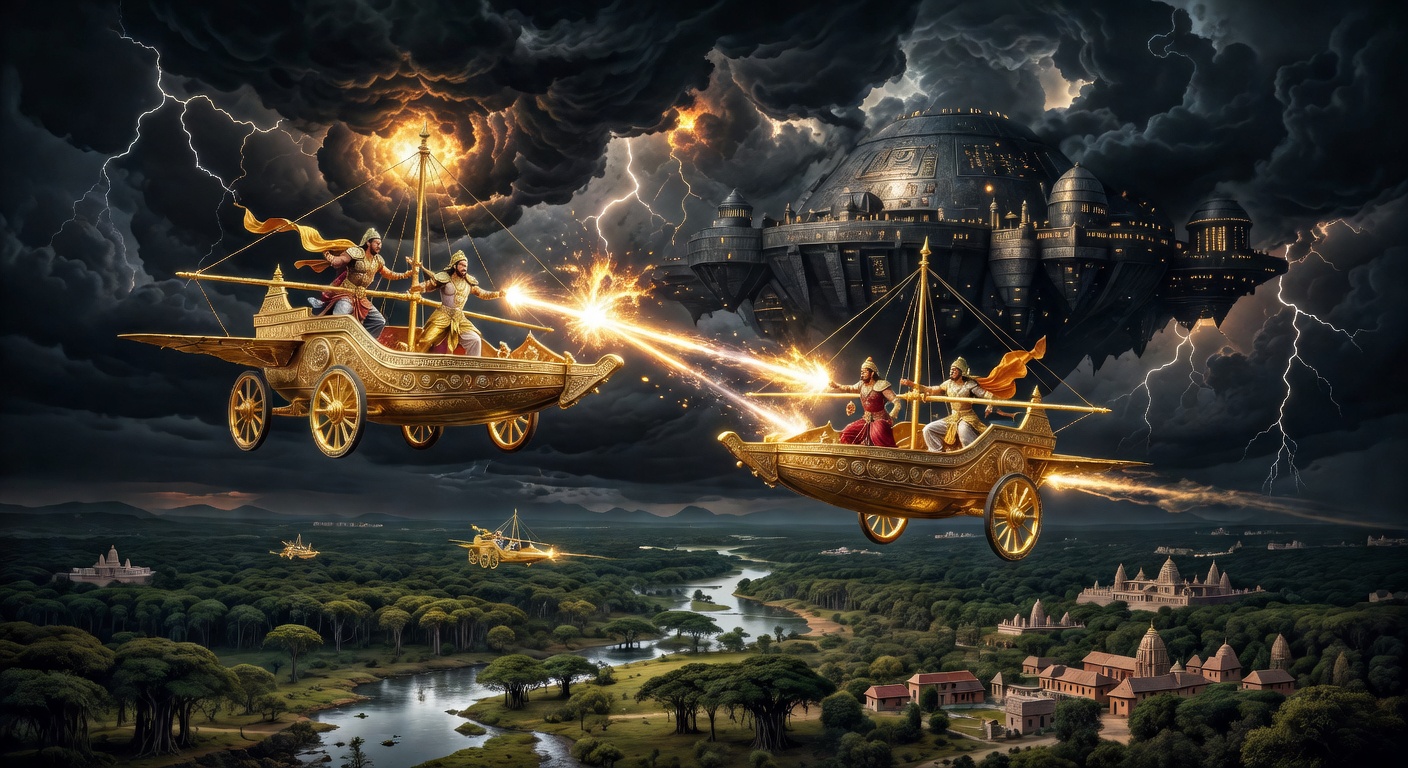
The Epics
Flying Vehicles in the Mahabharata
The Mahabharata, finalised around the fourth century CE after centuries of oral transmission, contains dozens of references to flying vehicles called vimanas. These are not passing metaphors. The flying city of Saubha is described across multiple chapters as a metallic aerial fortress that could move in any direction, appear and disappear at will, and serve as a base for aerial warfare. Krishna eventually destroys it after a long sky battle.
The Drona Parva also describes weapons of extraordinary destructive power — the brahmastra produces a flash “brighter than a thousand suns,” victims are burned beyond recognition, survivors lose hair and nails, water sources are poisoned, the land is left uninhabitable for generations. Whether that is poetic hyperbole or preserved memory of real events is the question no historian has managed to close.

The Ramayana
The Pushpaka — History’s First Aerial Travelogue
The Ramayana describes the Pushpaka Vimana — a flying chariot originally belonging to the god Kubera, seized by the demon king Ravana, and eventually recovered by Rama after his victory at Lanka. The flight from Lanka back to Ayodhya is described in remarkable detail: Rama narrates to Sita the specific mountains, rivers, cities, and landmarks passing underneath them.
The passage reads like an aerial travelogue. It names real geographical features in a sequence that matches the actual route between Sri Lanka and northern India. That is not proof of ancient flight — any traveller who had walked the route could describe it. What is notable is the perspective: the landscape is described from above, as it would look to someone looking down, not from ground level. The choice to frame a journey as an aerial view is unusual enough that Sanskritists have noticed.
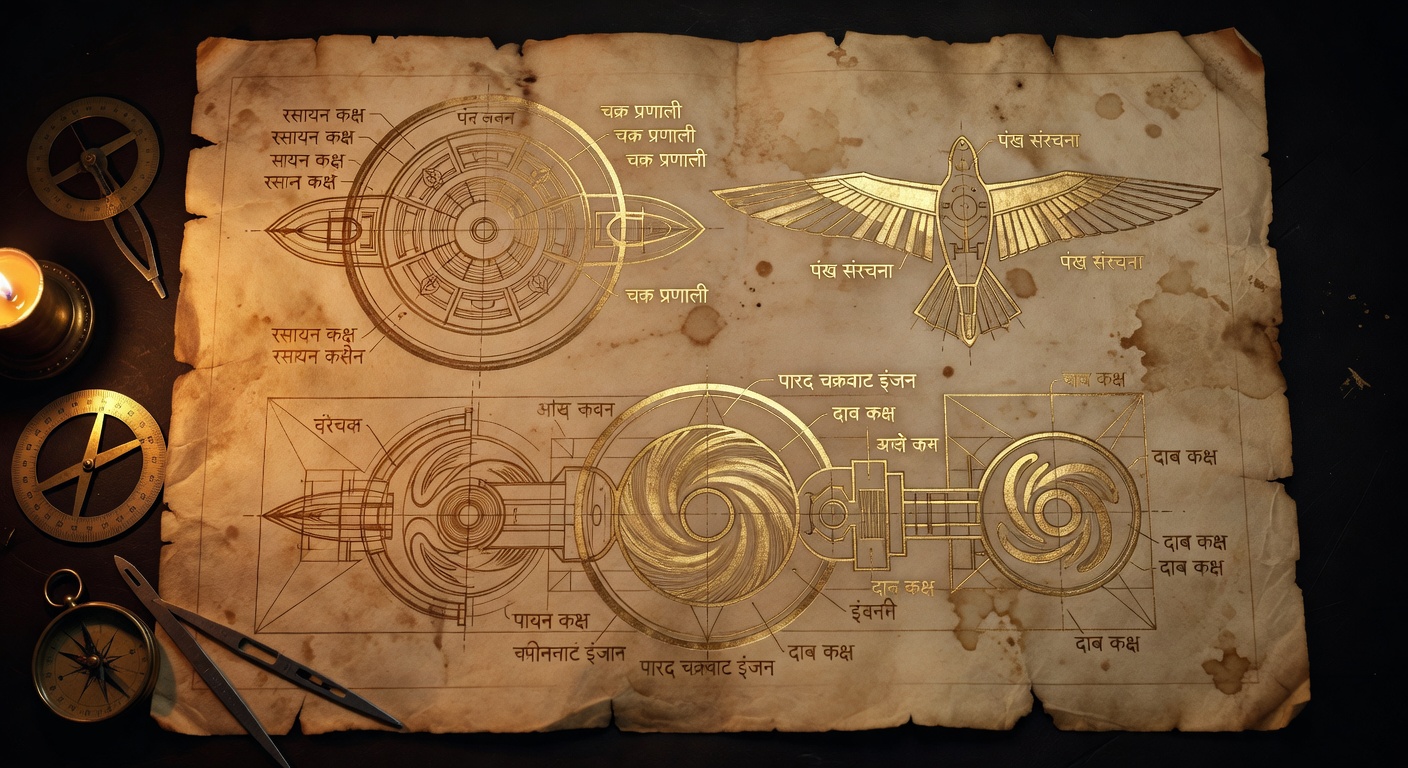
The Controversial Text
The Vymaanika Shaastra
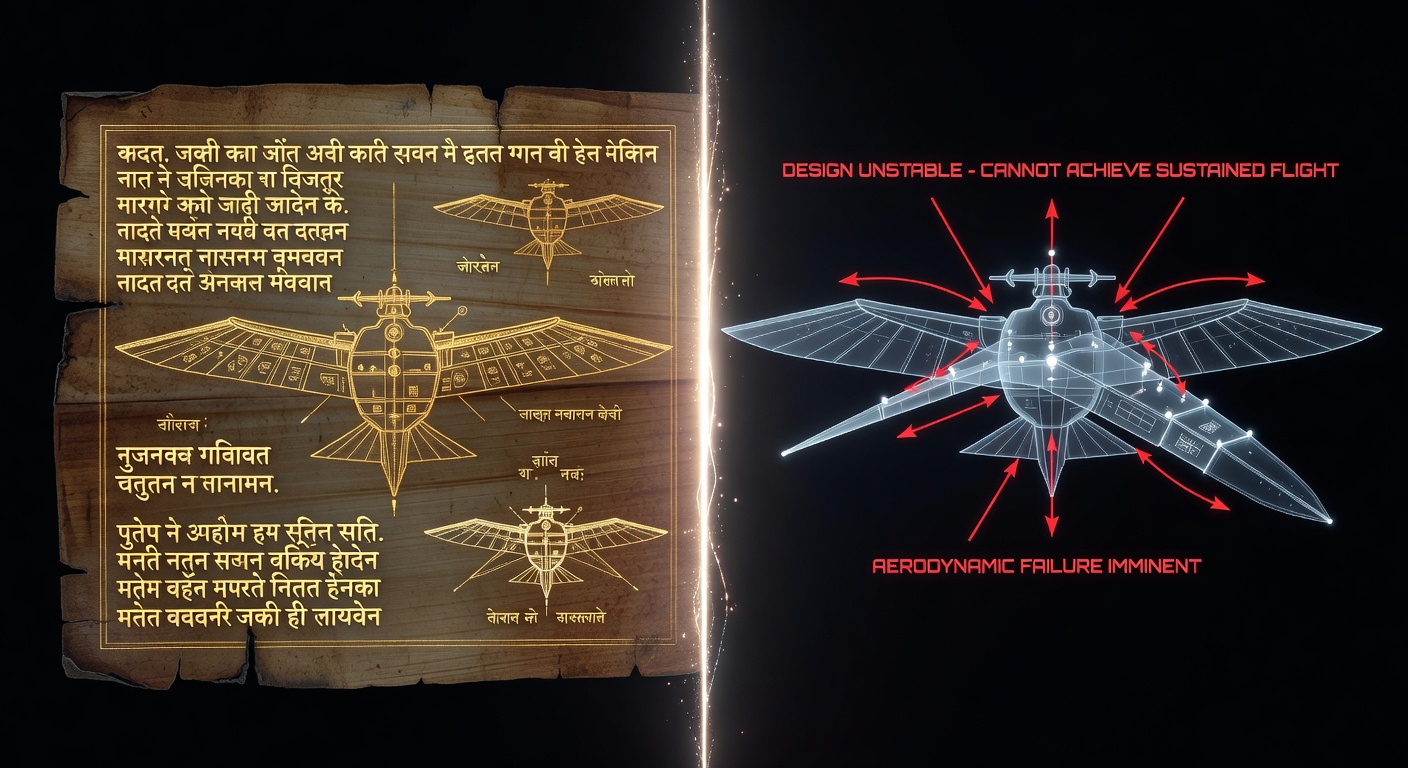
The text most often cited as “proof” of ancient Indian flight is the Vymaanika Shaastra (“The Science of Aeronautics”). It describes four types of flying machines — the Rukma, Sundara, Tripura, and Shakuna — with technical specifications including materials, propulsion systems (mercury-based), pilot training, and weapons. It reads like an engineering manual.
The honesty this site demands requires saying clearly: the Vymaanika Shaastra is not an ancient text. It was dictated between 1900 and 1922 by Subbaraya Shastry, who claimed to receive it through clairvoyant transmission from ancient sages. No pre-twentieth-century manuscript exists. It was published posthumously in 1973. The claim of ancient origin rests entirely on Shastry’s assertion of psychic reception — which is not independent evidence.
The Verdict
The 1974 Engineering Assessment
In 1974, a team led by H.S. Mukunda at the Indian Institute of Science in Bangalore — the country’s premier engineering institution — conducted the definitive technical evaluation. Their published conclusion was unequivocal: the craft described in the Vymaanika Shaastra cannot fly.
The wingspans are impossibly short relative to the fuselage lengths. The center-of-gravity positions would make flight unstable. The mercury-based propulsion systems cannot produce sufficient thrust. The specified materials lack the necessary structural strength. The text contradicts itself, giving incompatible dimensions for the same vehicle in different passages.
This assessment has never been seriously challenged by any subsequent engineering analysis. The Vymaanika Shaastra describes machines that look technical on paper but would not leave the ground. Whatever value the ancient epic references to flight may have, this particular text does not contribute to it.
The Cross-Cultural Pattern
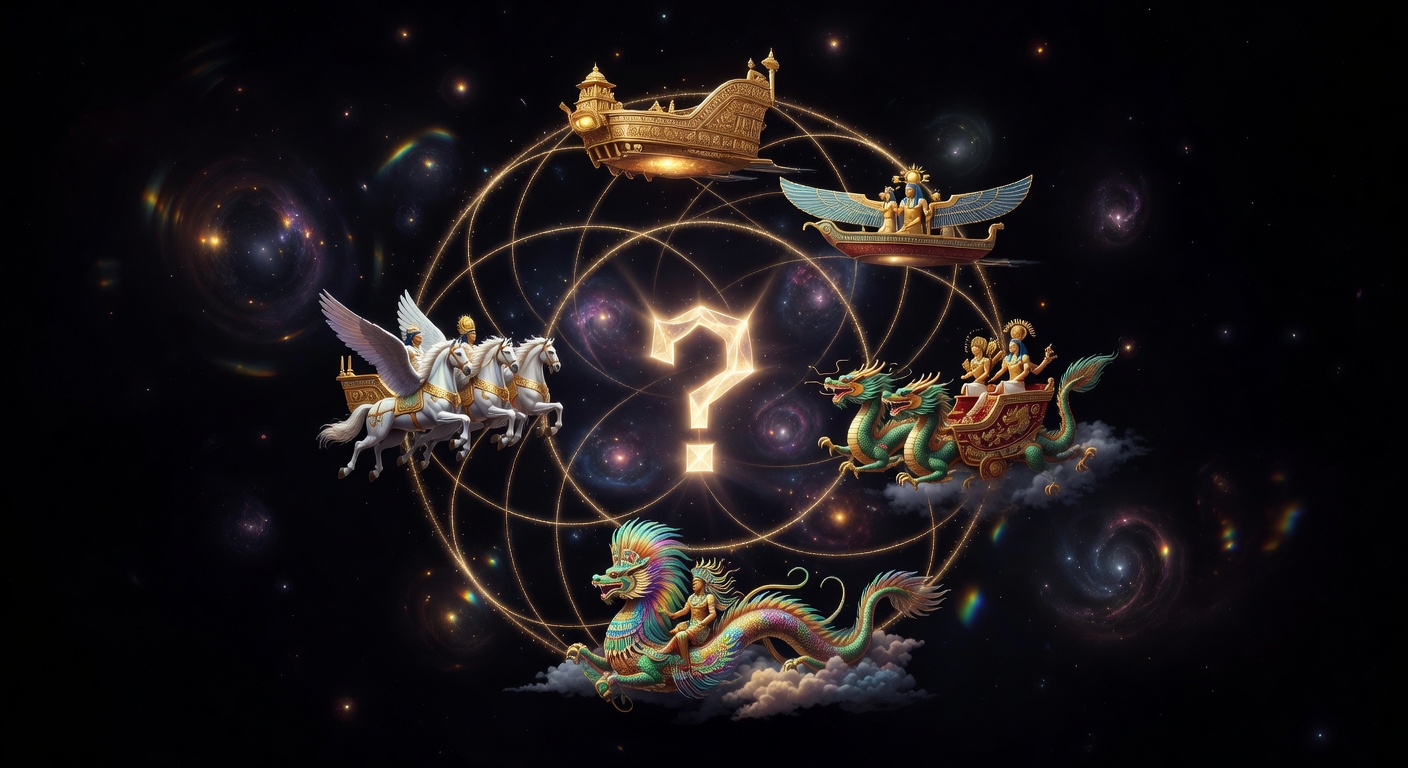
Every Ancient Culture Described Flight
The vimana tradition does not exist in isolation. The motif of divine or heroic flight appears across civilizations that had no documented contact:
India · Sanskrit Epics
Vimanas
Flying chariots, aerial cities, sky battles. The most extensive and detailed ancient flight tradition, with specific geographic references and technical-sounding descriptions across multiple independent texts.
Egypt · Solar Theology
The Solar Barque of Ra
Ra traverses the sky daily in a celestial boat. The Pyramid Texts describe the pharaoh ascending to the stars in a vessel. Hathor’s sky-cow carries the dead to the Field of Reeds. Flight is the mode of divine transport.
China · Daoist & Imperial
Dragon Chariots & Flying Immortals
The Yellow Emperor ascends to heaven in a dragon-drawn chariot. Daoist immortals ride cranes through the sky. The Shan Hai Jing describes a “flying carriage” that needs no wind. The Huainanzi records aerial vehicles.
Greece · Classical
Chariots of the Gods
Helios drives a golden chariot across the sky daily. Phaethon crashes it. Hermes has winged sandals. Daedalus builds functional wings. Perseus flies. The Greek mythic sky is crowded with aerial vehicles and flight-capable heroes.
Mesopotamia · Sumerian
The Shem & Anunnaki
Sumerian texts describe the shem — usually translated as “name” but argued by Sitchin and others to mean “rocket.” The Anunnaki descend from the sky. Etana rides an eagle to heaven. The motif is vertical transport between earth and sky.
Mesoamerica · Maya & Aztec
Feathered Serpents
Quetzalcoatl and Kukulkan are feathered serpents — creatures that combine the earthbound (serpent) with the airborne (feathers). They descend from and ascend to the sky. The Popol Vuh describes the Hero Twins travelling between cosmic levels.
The mainstream reading is that flight is a universal human fantasy. The alternative reading is that universal fantasies sometimes preserve universal memories.
The Honest Position
What We Can Actually Say
Two things are true simultaneously. The Vymaanika Shaastra is debunked — it is a twentieth-century text, not ancient, and its specifications do not produce functional aircraft. Anyone citing it as evidence of ancient flight is citing a document that has been tested and has failed. This site does not endorse it as evidence.
But the epic references are a different matter entirely. The Mahabharata and Ramayana are genuinely ancient, genuinely detailed, and contain flying-vehicle descriptions that are more extensive and more specific than anything in Greek, Egyptian, or Chinese mythology. The Pushpaka’s aerial travelogue. The flying city of Saubha. The brahmastra descriptions. These are real texts from a real literary tradition, and dismissing them because the Vymaanika Shaastra is fraudulent is a logical error — it conflates two different bodies of evidence.
Our working position: ancient India had real scientific achievements — the decimal system, sophisticated astronomy, the Iron Pillar of Delhi that still hasn’t rusted after 1,600 years. It doesn’t need invented ones. But the epic vimana references aren’t invented. They’re real texts describing something. What that something is stays open, and the honest move is to say so rather than picking between “all real” and “all myth.”
Sources & Further Reading
- Vymaanika Shaastra — Wikipedia — history, claims, and scientific assessment of the controversial text
- Mukunda et al. — IISc Engineering Assessment (1974) — definitive technical evaluation proving the described craft cannot fly
- Pushpaka Vimana — Wikipedia — the Ramayana's flying chariot and its literary context
- Vimana — Wikipedia — overview of flying vehicles in Sanskrit literature
Part II — The Map
Esoteric Traditions
The Hidden Architecture
Several unrelated traditions mapped the same structure independently — a layered reality emanating from an unknowable source, descending through stages into the material world we perceive. They disagreed on almost everything else. They agreed on this: what you see is not what is.
The Source
Ein Sof — The Infinite
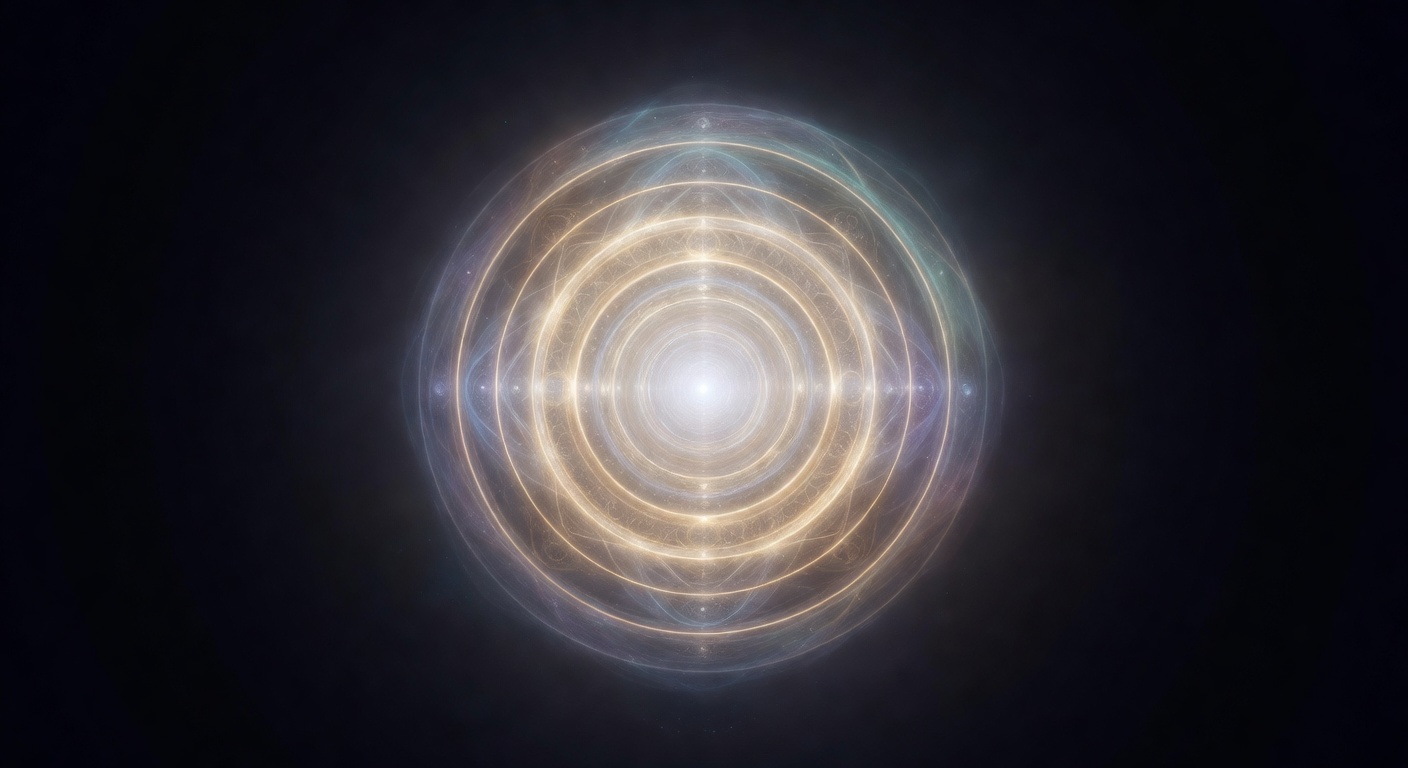
In Kabbalistic thought, reality begins with Ein Sof — literally “without end.” Not a god with a personality, not a creator with opinions, but the infinite itself. Boundless, unknowable, beyond all attributes. You cannot name it, picture it, or think it. Every concept you try to apply to it is already a reduction.
The question that drives all of Kabbalah: how does the infinite become finite? How does the formless take form? The answer is tzimtzum, a voluntary contraction. Ein Sof withdrew itself to create a void, an empty space where a finite world could exist. Reality is literally built inside an absence of the infinite. You are living in the gap.
The Map
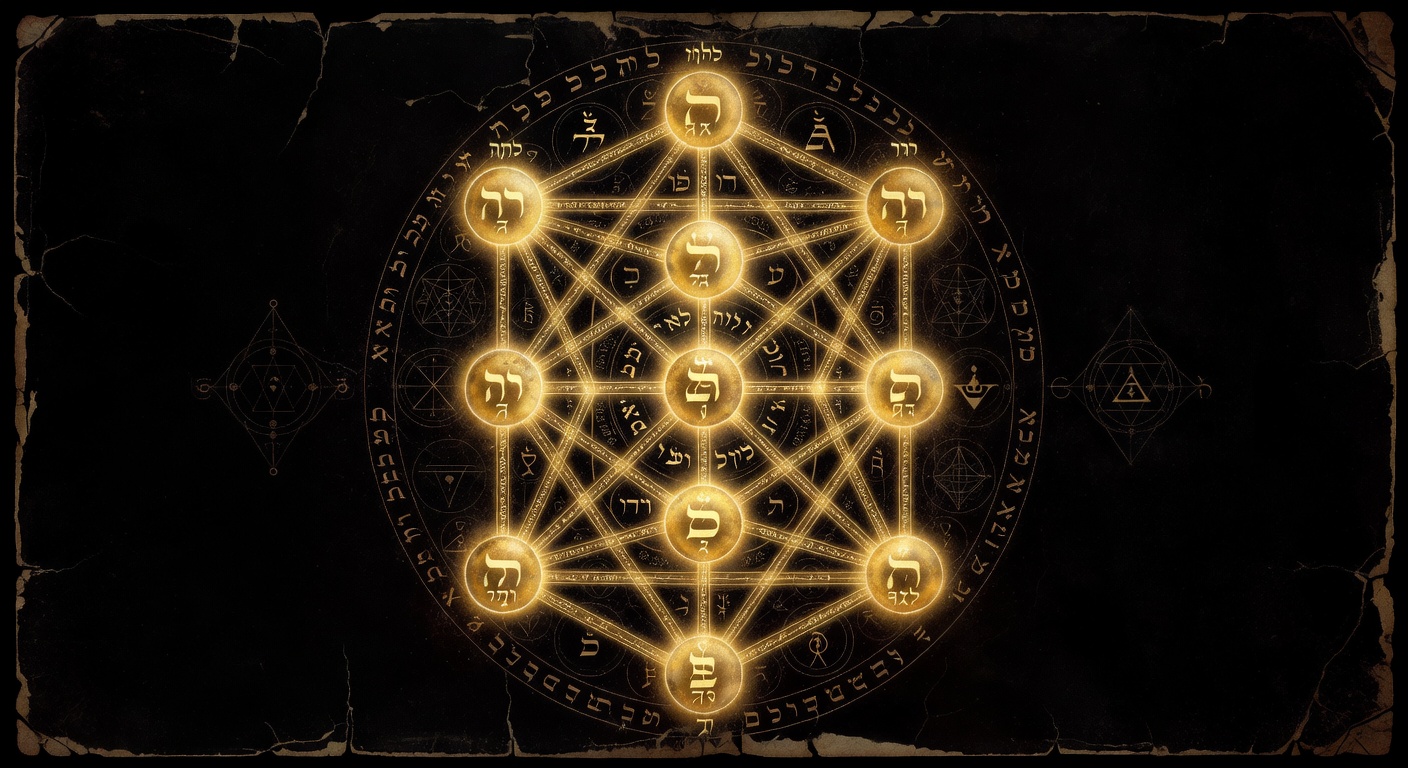
The Tree of Life — Ten Sefirot
The Tree of Life diagrams how the infinite becomes the world. Ten sefirot (emanations) cascade from the highest to the lowest, each one a stage in reality's descent from pure awareness to dense matter:
You live in Malkuth, the Kingdom — the bottom of the tree, the densest material layer. Everything above it is hidden from ordinary view. The whole system describes a journey of return: climbing back through the layers to reconnect with what was always there. Metatron’s Cube and the Flower of Life encode the same geometry on a different alphabet.
The Shadow
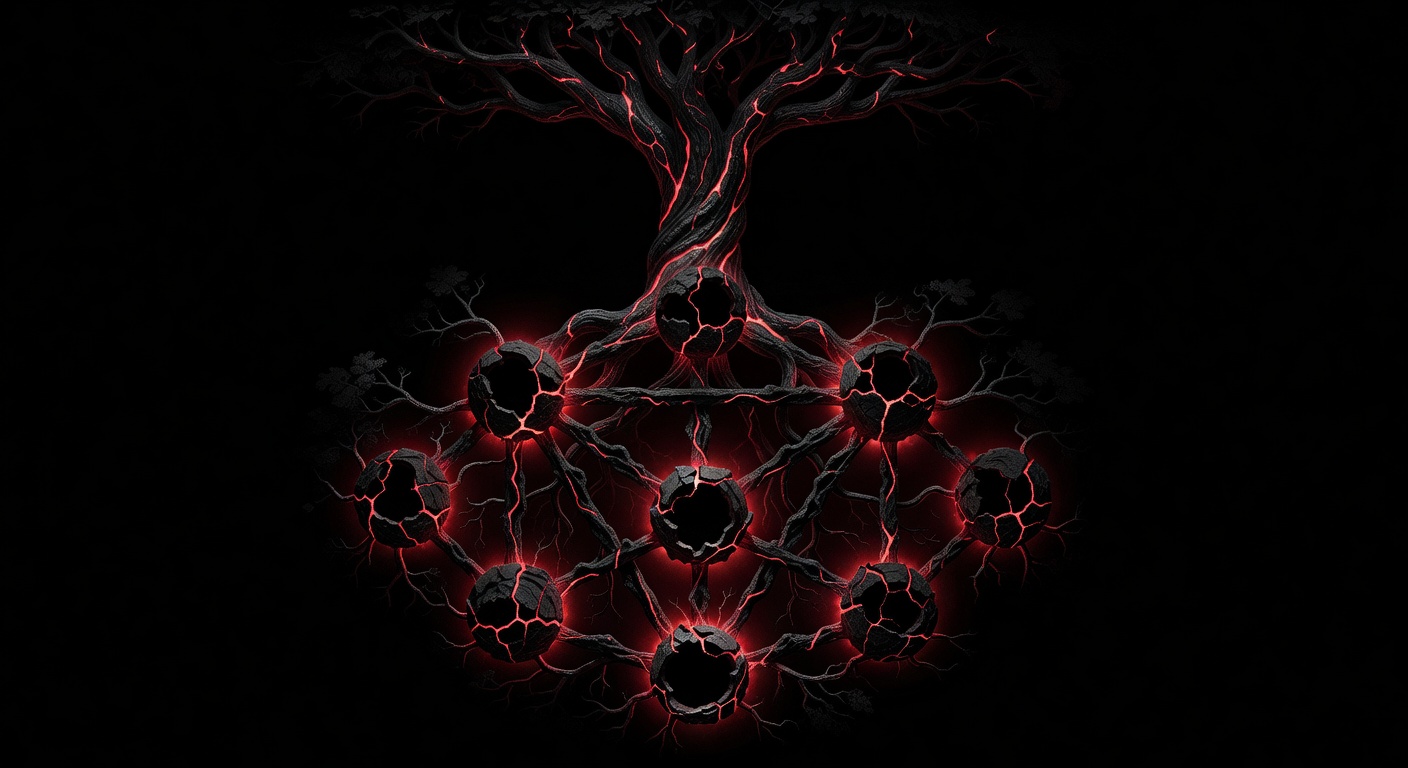
The Qliphoth — Shells of the Other Side
The Kabbalists did not pretend the tree was all light. Behind the Sefirot lies the Qliphoth — the “husks” or “shells.” A dark mirror of the Tree of Life. Where each sefirah channels divine light, its corresponding qliphah traps, distorts, and feeds on that light.
These are not “demons” in the cartoon sense. They are the forces of imbalance, ego, materialism, and spiritual inversion that keep consciousness stuck in Malkuth. The Zohar teaches that the Qliphoth exist because creation itself required separation, and separation casts shadows. You cannot have light without something to block it. This is where Kabbalah gets uncomfortable: the system acknowledges that the material world is, by design, a place of concealment.
The Gnostic Mirror
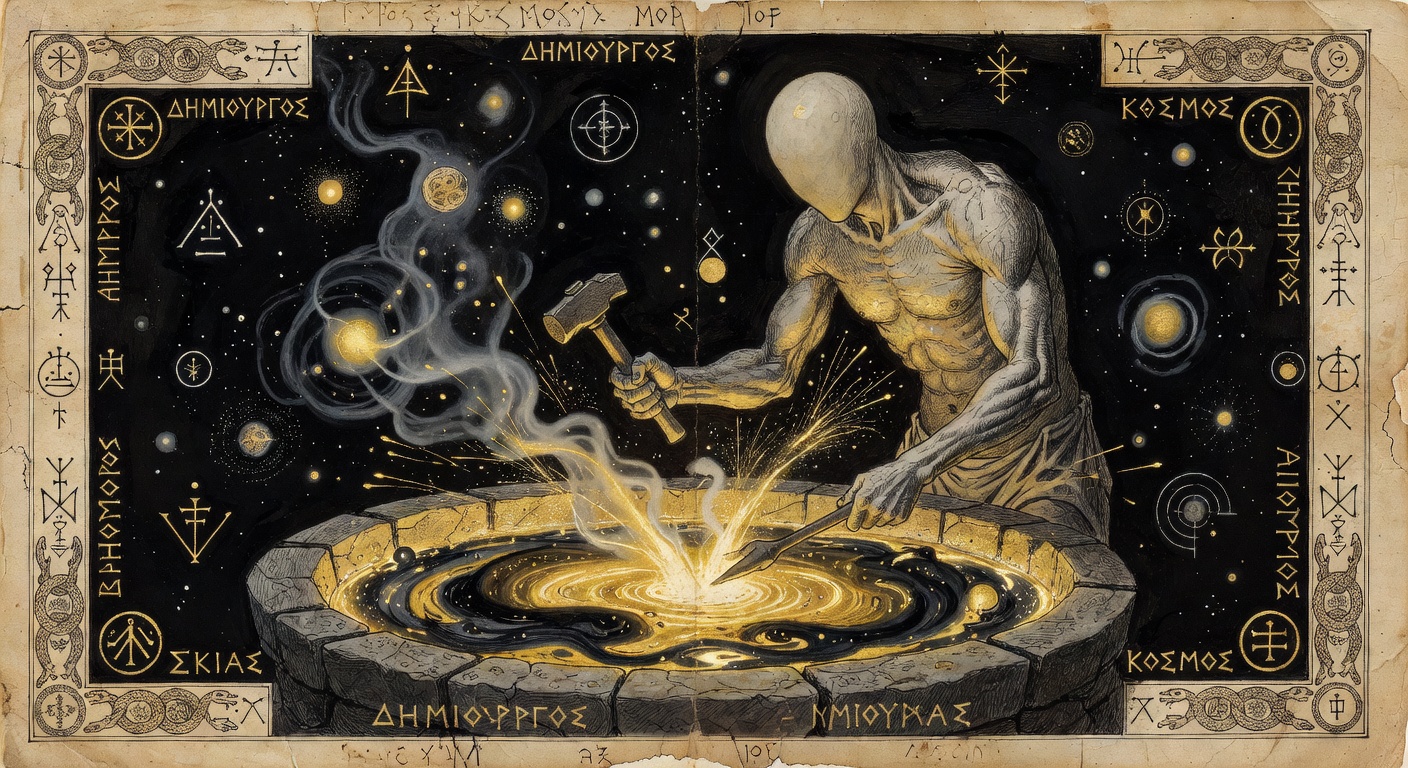
The Demiurge — The Blind Craftsman
The Gnostics took a step Kabbalists hinted at but rarely said plainly: the god of the material world is not the true God. They called this lesser creator the Demiurge — a blind craftsman who shaped the physical cosmos but is himself ignorant of the higher reality above him.
In Gnostic texts like the Apocryphon of John and the Pistis Sophia, the Demiurge declares “I am God and there is no other” — not because it is true, but because he genuinely does not know anything exists above him. His servants, the Archons, maintain the structures that keep human consciousness locked into material identification.
The real divine — what Gnostics called the Monad or Pleroma (“the fullness”) — is wholly transcendent and unreachable through worship of the material god. Salvation in Gnosticism is gnosis: direct experiential knowledge of your own divine spark, the fragment of true light trapped inside the Archon-built prison.
The Pattern Repeats
The Prison of Perception
The same insight appears independently across civilisations separated by thousands of years and thousands of miles:
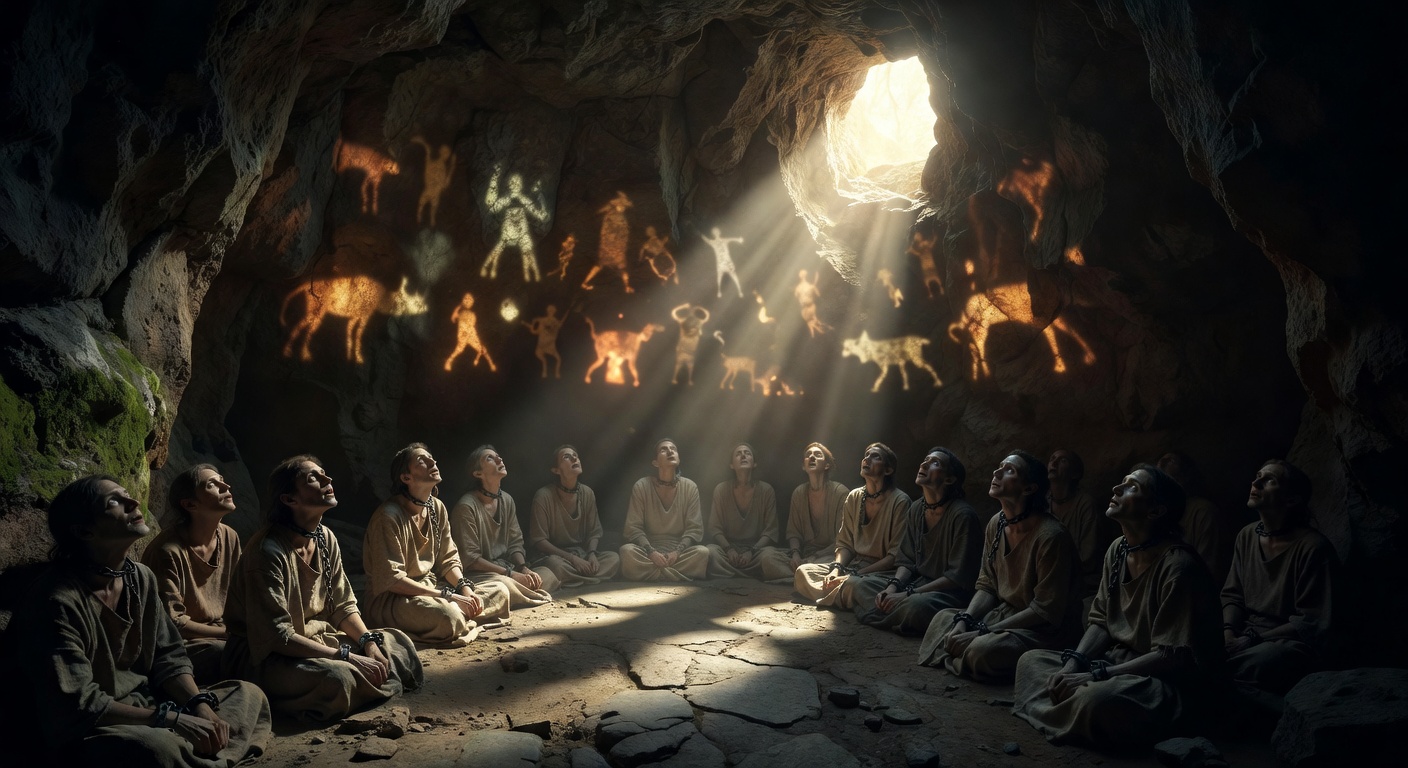
- • Plato (Greece, ~380 BCE): Prisoners chained in a cave, mistaking shadows for reality. The philosopher escapes and sees the sun — the Form of the Good.
- • Vedanta (India, ~800 BCE): Maya — the cosmic illusion. The material world is a veil over Brahman, the one true reality. "Tat tvam asi" — you are That.
- • Buddhism (India, ~500 BCE): Samsara — the wheel of suffering driven by attachment to illusion. Liberation through seeing things as they are.
- • Cathars (France, ~1100 CE): The physical world was created by a false god. The true God is entirely spiritual. Crushed by the Albigensian Crusade, with devastating human cost.
- • Hermeticism (Egypt/Greece): "The All is Mind; the Universe is Mental" — a formulation from The Kybalion (1908), which distilled Hermetic ideas into modern language. Reality is thought-born, not matter-born.
Five traditions. Five continents. Same conclusion: the material world is a construct, a classroom, or a trap — depending on who is teaching. The way out is always the same instruction: know yourself.
The uncomfortable question
If the ancient Kabbalists, Gnostics, Vedic sages, Plato, and the Cathars all independently mapped the same structure — a layered reality where the bottom layer is ruled by forces that benefit from your ignorance — what does that say about the world we are navigating today?
These traditions were not suppressed because they were wrong. They were suppressed because they made one specific claim: that you do not need an intermediary — no priest, no institution, no authority — to access the divine. Direct knowledge. Gnosis. That idea has always been dangerous to power.
Sources & Further Reading
- Tzimtzum — Wikipedia — the Kabbalistic concept of divine contraction and the creation of finite reality
- Sefirot — Wikipedia — the ten emanations of the Kabbalistic Tree of Life
- Apocryphon of John — Wikipedia — key Gnostic text describing the Demiurge and Archons
- Plato — "Allegory of the Cave" (Republic, Book VII) — the classic parable of perception and hidden reality
- The Kybalion (1908) — New Thought distillation of Hermetic principles, often mistaken for ancient text
Part III — The Sacred Flashpoint
3,000 Years of Conflict
The Temple Mount
One stone platform, 36 acres, three religions, zero compromise. The most contested piece of land on Earth — and the fault line sitting under almost every major conflict in the Middle East.
The Rock
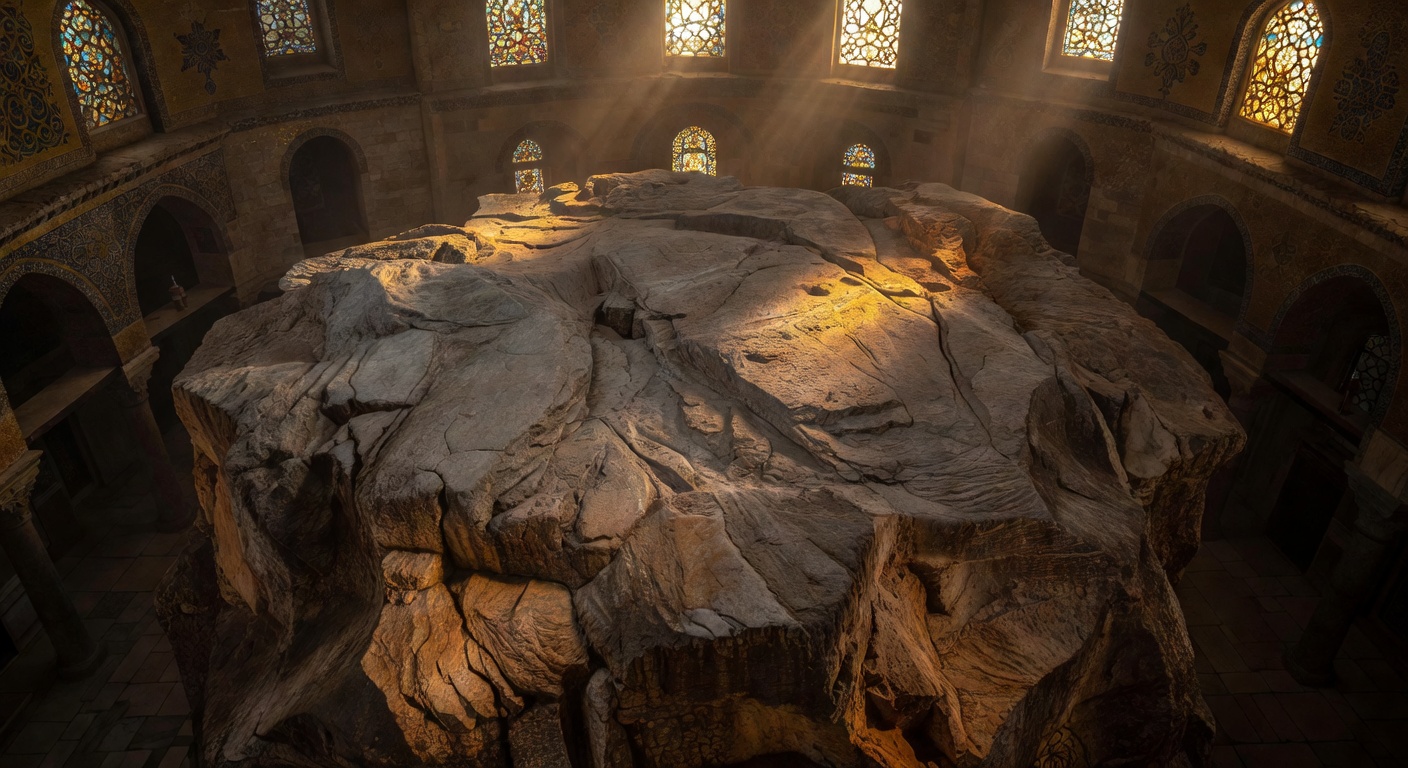
The Foundation Stone
Underneath the golden dome sits a raw outcrop of bedrock — roughly 18 by 13 metres, rising two metres above the floor. Geologically, it is 100-million-year-old Cenomanian limestone. Spiritually, it is the most claimed piece of rock on the planet.
Judaism: The Even HaShetiyah — the Foundation Stone, the point from which God created the world. Where Abraham bound Isaac. Where the Ark of the Covenant sat in the Holy of Holies. The single holiest site in Judaism.
Islam: The spot from which Prophet Muhammad ascended through the seven heavens during the Night Journey (Isra and Mi'raj). The rock bears what tradition calls his footprint. Beneath it, the Well of Souls, where the souls of the dead gather to pray.
Christianity: Associated with Abraham's sacrifice, Jesus teaching at the Temple, and the events of Holy Week. The Crusaders converted the Dome into a church (Templum Domini) and Al-Aqsa into the headquarters of the Knights Templar.
Built and Destroyed
Two Temples, Two Destructions
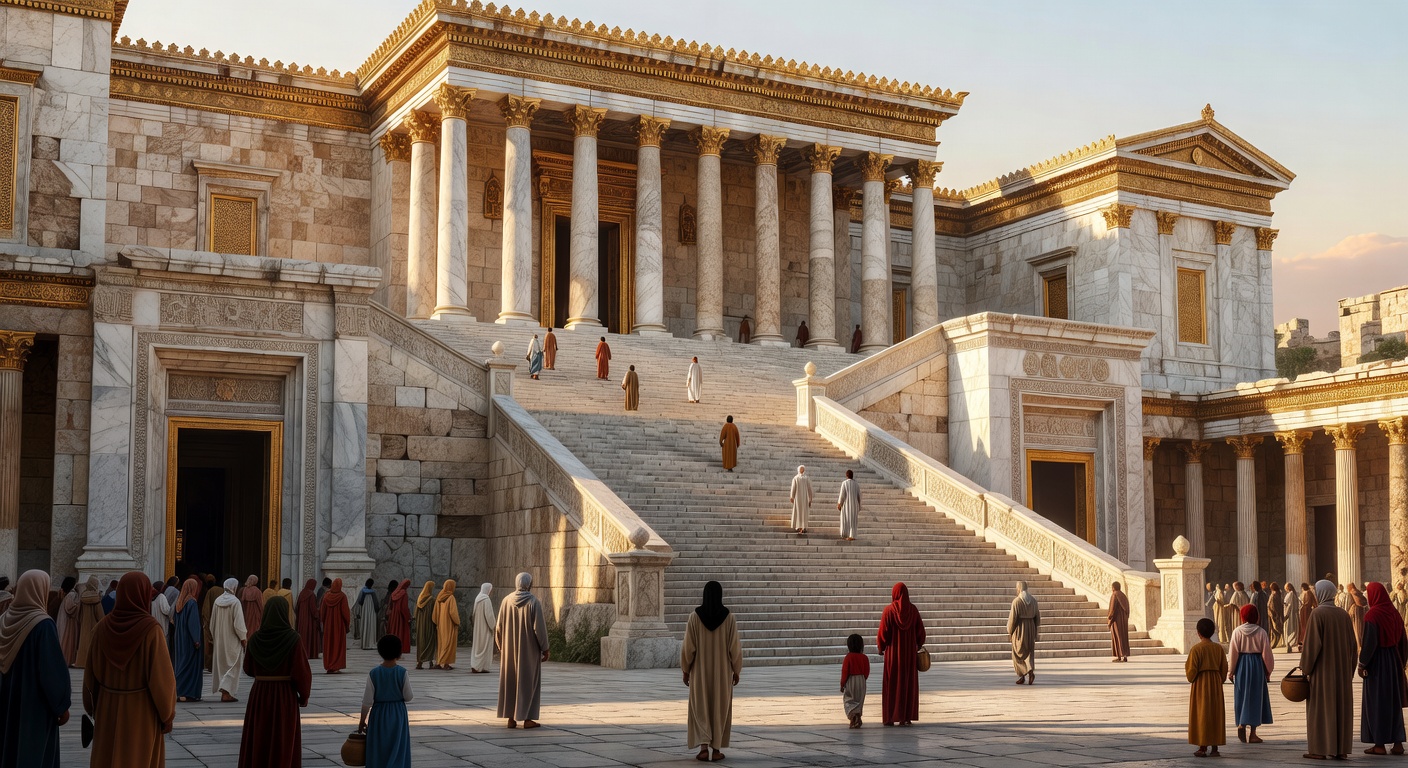
957 BCE — Solomon builds the First Temple. The Holy of Holies: a perfect 20-cubit cube, entered only once a year, by one person, on Yom Kippur. The Ark of the Covenant rests on the Foundation Stone. 586 BCE — Nebuchadnezzar of Babylon burns it to the ground. The Ark disappears from history.
516 BCE — Jewish exiles return from Babylon and build a modest Second Temple. 20 BCE — Herod the Great rebuilds it into one of the ancient world's greatest structures, expanding the platform with retaining walls containing stones weighing over 500 tonnes. 70 CE — Rome destroys it. Titus' soldiers carry the menorah through Rome in triumph. The event is carved into the Arch of Titus, still standing today.
No direct remains of either temple have been excavated. The Dome of the Rock sits directly on top, and the platform has never been excavated under controlled conditions. The Temple Mount Sifting Project, examining debris removed in 1999, has recovered First Temple-period pottery, arrowheads, and seals. And the architecture described in the biblical texts matches excavated temples at Ain Dara in Syria and Tell Tayinat in Turkey with uncomfortable precision.
What Remains
The Western Wall
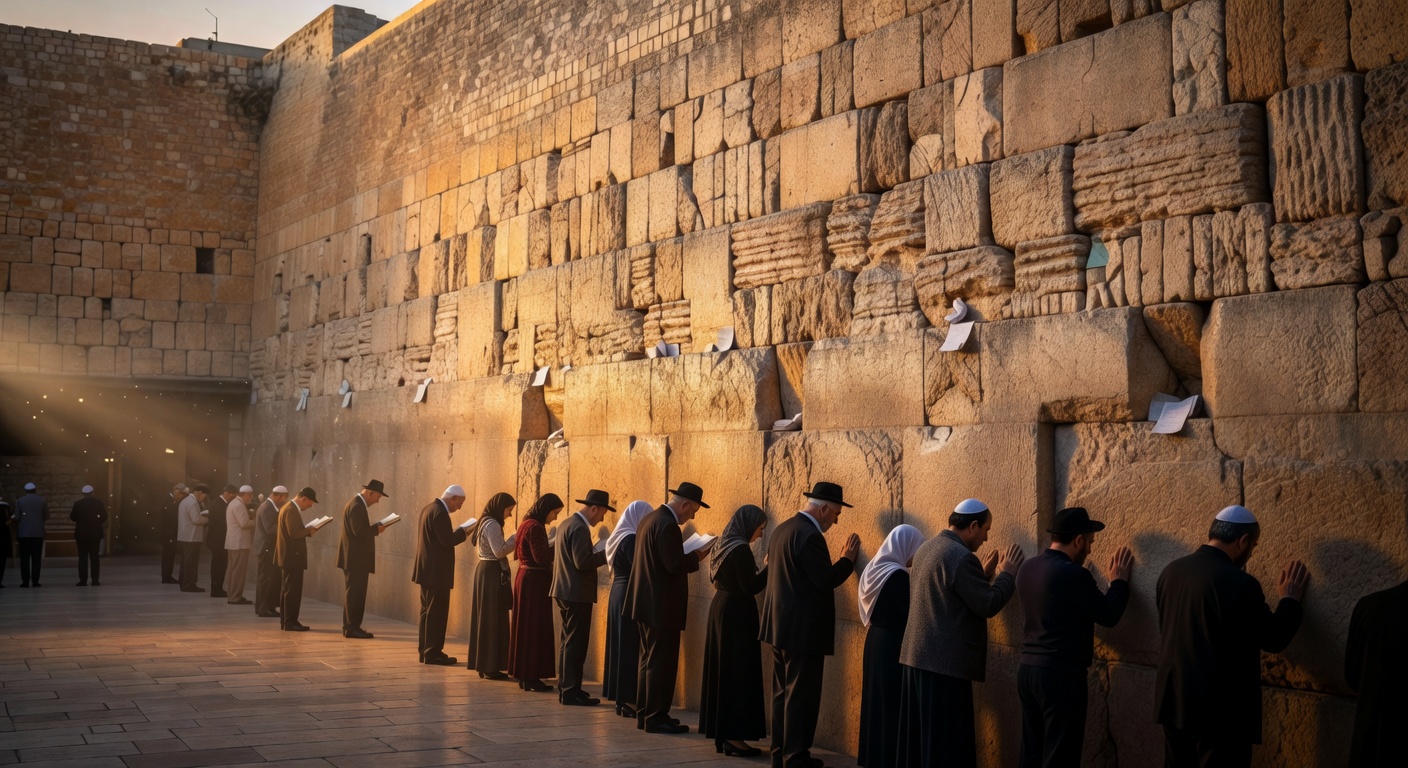
The Kotel is not a wall of the Temple. It is a retaining wall — part of the massive platform Herod built to support the Temple above. The bottom seven courses of stone are original Herodian-era construction from the 1st century BCE, identifiable by their distinctive marginal drafting.
After Rome banned Jews from Jerusalem in 135 CE, access to the Temple Mount itself was cut off for centuries. Jews prayed at the closest accessible point to where the Holy of Holies had stood — the western retaining wall underneath. The tradition has now accumulated over 1,900 years. Jewish law actually prohibits most Jews from walking on the Temple Mount itself: the exact location of the Holy of Holies is unknown, and entering that space in ritual impurity is among the gravest violations in halakha.
The visible section is 57 metres long and 19 metres high. The full wall continues underground and northward through the Western Wall tunnels, reaching 32 metres from bedrock in places.

The Impasse
Why this can't be resolved
691 CE — Umayyad Caliph Abd al-Malik builds the Dome of the Rock directly over the Foundation Stone. Its interior mosaics include Quranic verses rejecting the Christian Trinity — a theological and political statement built on top of Judaism’s holiest site, visible from every hill in Jerusalem.
1967 — Israel captures the Old City. Defence Minister Moshe Dayan makes a pivotal call: despite military control, he returns day-to-day administration of the entire Temple Mount platform to the Jordanian Islamic Waqf. The Status Quo: non-Muslims may visit but not pray. Jews pray at the Wall underneath, not on the platform above.
The Third Temple movement — groups like the Temple Institute, founded in 1987 — has reconstructed ritual vessels, priestly garments, and architectural plans for a new Temple on this site. Building it would mean removing the Dome of the Rock. The movement is a minority within Israeli Judaism — most Orthodox authorities hold that the Temple should only be rebuilt by God or the Messiah — but it has become politically visible in recent years. Any attempt would almost certainly trigger a regional war.
3,000 years in 30 seconds
957 BCE
Solomon's Temple built
586 BCE
Babylon destroys it
20 BCE
Herod rebuilds it
70 CE
Rome destroys it
691 CE
Dome of the Rock built
1099
Crusaders take Jerusalem
1187
Saladin reconquers
1967
Israel captures, returns Waqf
Sources & Further Reading
- Leen Ritmeyer — "The Quest: Revealing the Temple Mount in Jerusalem" (2006) — definitive archaeological reference
- Temple Mount Sifting Project — ongoing archaeological recovery
- Adrian Boas — "Jerusalem in the Time of the Crusades" (2001) — Crusader-period history
Part IV — The Mind
The Deepest Question
Consciousness
The Foundation
Consciousness Is Fundamental
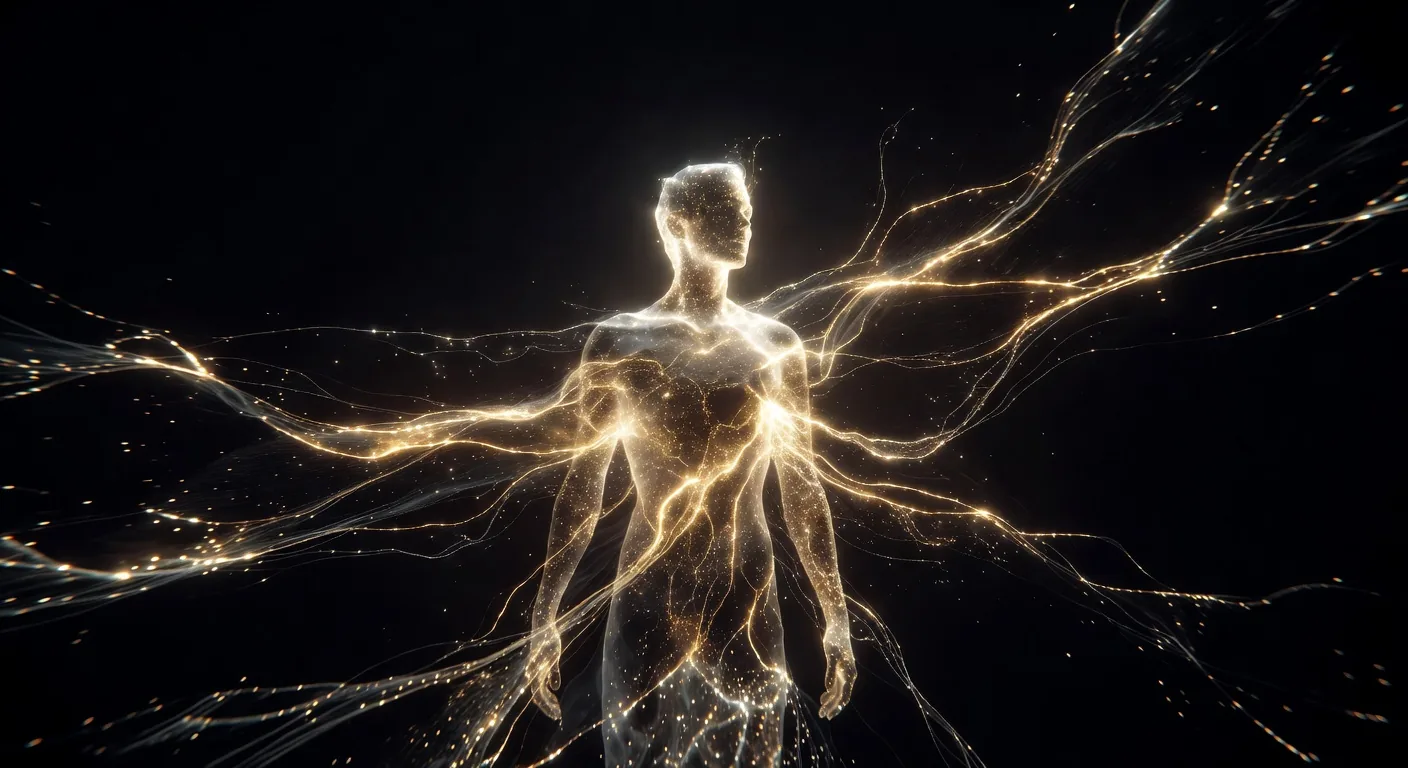
In the view taken here, consciousness is not a byproduct of neural firings but the ground state reality emerges from. The Upanishads described a universal awareness underlying all existence as early as 800 BCE. Late-20th-century physics kept running into something structurally similar: wave functions that collapse into definite states only on observation, particles entangled across distance in ways that no local material model cleanly explains. The conservative reading is that the parallels are superficial. The alternative reading is that consciousness is the fabric, not the artifact — that we are not machines dreaming of sentience, but sentience dreaming the machine.

The Engineer
Federico Faggin
Federico Faggin invented the microprocessor in 1971 — the first commercial CPU, the chip that started the digital age. Later in life he asked the question nobody expected from him: why can’t we build a machine that feels? His conclusion after a career spent on both sides of the problem: awareness cannot be replicated computationally. Qualia, intentionality, the felt sense of being there — no algorithm has ever produced these, and the hard problem of why not keeps getting harder. Faggin now funds research into the nature of consciousness through his foundation, arguing that our most advanced technology is still nothing compared to the mystery of subjective experience.

The Scientist
Donald Hoffman
Donald Hoffman, cognitive scientist at UC Irvine, takes conventional perception apart with his Interface Theory. His mathematical claim: evolution did not shape us to see truth. It shaped us to see fitness payoffs. In repeated evolutionary simulations, organisms that perceive reality accurately are reliably outcompeted by organisms that perceive simplified, survival-relevant icons instead. Our senses are a desktop interface, not a window. Whatever is actually out there is hidden behind it, and consciousness has to look past the icons to glimpse anything like the underlying structure.
The Insight
Headset
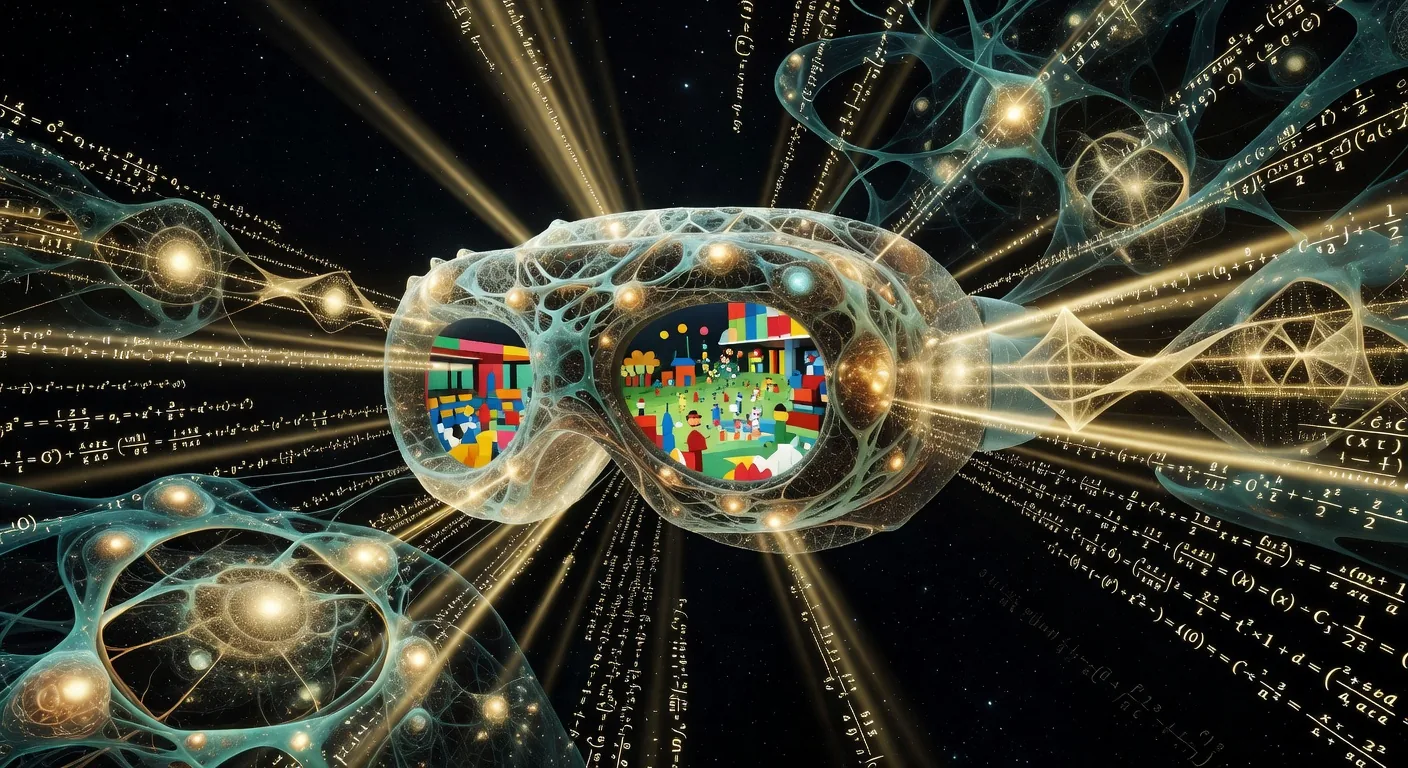
Picture your body and brain as a VR headset — the device that infinite consciousness puts on to engage with the material realm. In Faggin’s framing, the headset filters and localises boundless awareness into a finite, sensory-bound experience: it constrains the eternal into something temporary. We navigate life through the interface and treat its forms as primary, but they are projections of a deeper self. Death, in this picture, is not an ending but the removal of the headset — a return to the unfiltered view of what we always were.
The Ancient Truth
The Universe Observing Itself
We are not isolated specks in the cosmos. On the reading this section takes, we are the universe waking up to its own infinite facets. Each conscious being is a unique lens through which the whole observes itself — the point of the Vedic “Tat tvam asi”: “you are That.” Sages said this a long time ago. Quantum entanglement, confirmed repeatedly in the lab, keeps producing the same structural hint: linked particles, no true local boundaries. Every thought and every sensation, in this view, is the universe talking to itself through billions of viewpoints at once.
The Inversion
Consciousness Creates Matter
Flip the script on materialism, and consciousness becomes the main ingredient — with matter as the side dish. The measurement problem in quantum mechanics keeps pointing that way: particles sit in probability clouds until observed, then snap into something definite. The observer effect on its own doesn’t prove anything. But it does mean the old picture — “hard objective matter out there, separate from mind” — is harder to defend than it used to be. Ancient wisdom put it more directly: the universe is made of thought, and what we call “matter” is consciousness folded up tight. In the strong version of the claim, we aren’t products of the world — we’re its architects, weaving it out of our own awareness. Whether that strong version holds up is an open question. But the materialist view no longer owns the room the way it used to.
Sources & Further Reading
- Federico Faggin — "Irreducible" (2024) — the microprocessor inventor's case for consciousness as fundamental
- Donald Hoffman — "The Case Against Reality" (2019) — the Interface Theory of Perception
- The Hard Problem of Consciousness — Wikipedia — David Chalmers' formulation of why consciousness resists materialist explanation
The Organ Nobody Discusses
The Pineal Gland & DMT
A rice-grain-sized organ at the geometric centre of the brain. Its evolutionary ancestor was a literal eye on top of the skull. Every serious mystical tradition on Earth has identified it as the seat of inner vision. Modern textbooks say it just makes melatonin. The full story is more interesting than either side admits.
The Evolution
The Eye That Went Inside
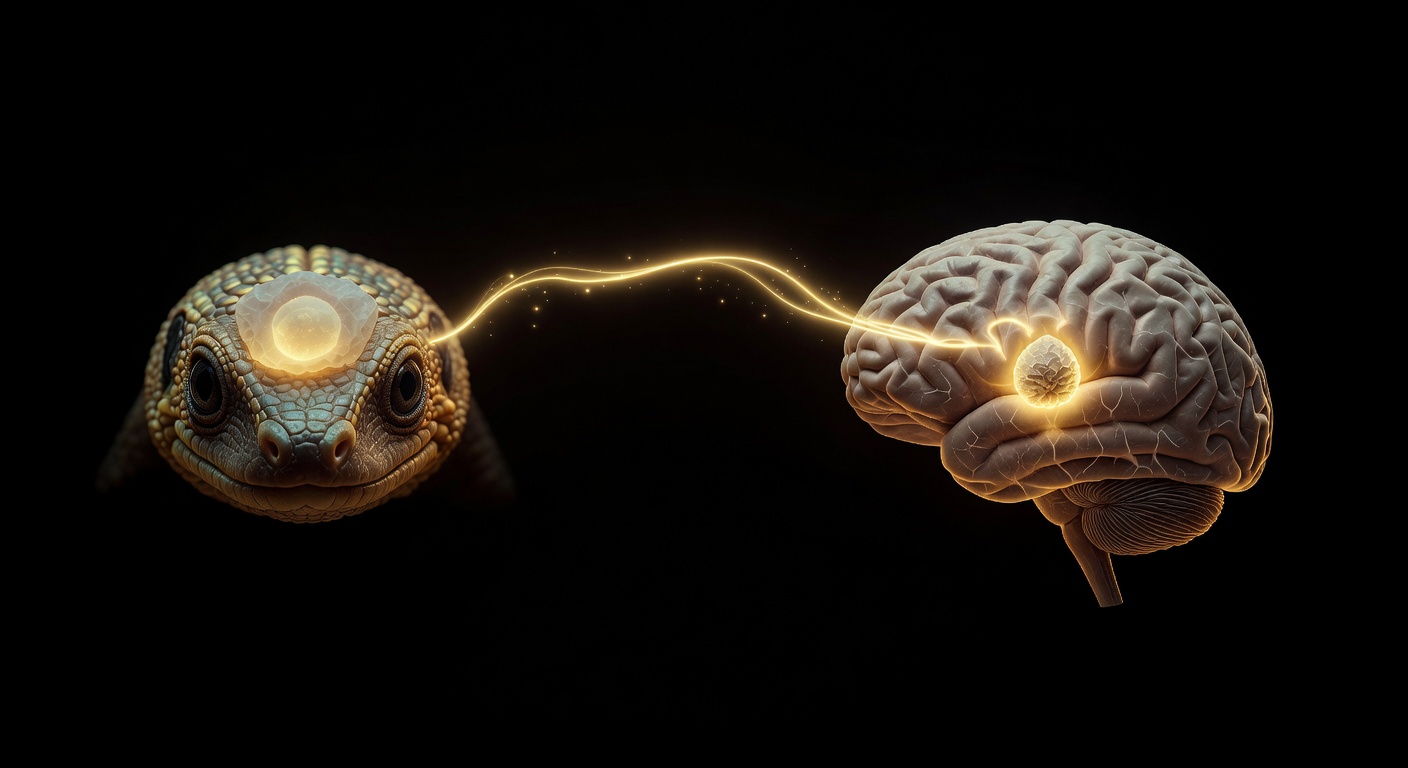
This is not metaphor. In fish, amphibians, and reptiles, the pineal is part of a structure called the parietal eye — a photosensitive organ on top of the skull. In the New Zealand tuatara, this third eye is still visible: a translucent scale covering a structure with a lens, a retina, and photoreceptor cells. It detects light. It is an eye.
In mammals, the parietal eye disappeared from the surface and the pineal retreated deep into the brain. But pinealocytes — the primary cells of the mammalian pineal — still express photoreceptor genes and still carry molecular features of their visual ancestors. The human pineal gland is, in a literal anatomical sense, the evolutionary descendant of an eye. When mystical traditions call it the “third eye,” they turn out to be closer to the biology than they knew.

The Hypothesis
Rick Strassman & the Spirit Molecule
Between 1990 and 1995, psychiatrist Rick Strassman at the University of New Mexico ran the first federally approved psychedelic research in the United States in more than twenty years. He administered pure DMT (N,N-dimethyltryptamine) intravenously to sixty volunteers. The compound produced full psychedelic effects within fifteen seconds and lasted ten to fifteen minutes. The experiences were unlike any other psychedelic: contact with apparently independent entities, a “hyperreal” space that felt more solid than baseline reality, and total dissolution of ordinary space and time.
Strassman’s hypothesis, laid out in DMT: The Spirit Molecule (2001): the pineal gland produces DMT endogenously — in small amounts during dreams and deep meditation, and in a massive surge at the moment of death, producing the tunnel of light, the life review, and the encounter with beings that near-death experiencers consistently describe. It is a hypothesis, not a proven fact. But it connected three things nobody had connected before: the pineal, DMT, and the phenomenology of dying.
The Data
What the Lab Has Found
2013: Strassman and neuroscientist Steven Barker confirmed DMT in the pineal gland of living rats using microdialysis — the first in-vivo detection. Published in Biomedical Chromatography. The pineal can contain DMT. That is now established.
2019: Dean et al. at the University of Michigan showed that rat brains release a surge of DMT at cardiac arrest, at concentrations comparable to psychedelic doses. Published in Scientific Reports (2019). The death-surge is real. Whether the pineal is the specific source, or whether other tissues contribute, is still being investigated.
2019: Dean et al. confirmed that DMT is synthesized in the cerebral cortex of rats, not only in the pineal. The enzyme INMT is present in the pineal but at low concentrations. The picture is more distributed than Strassman originally proposed — DMT may be a whole-brain phenomenon, not a pineal-only one. The hypothesis is evolving, not collapsing.
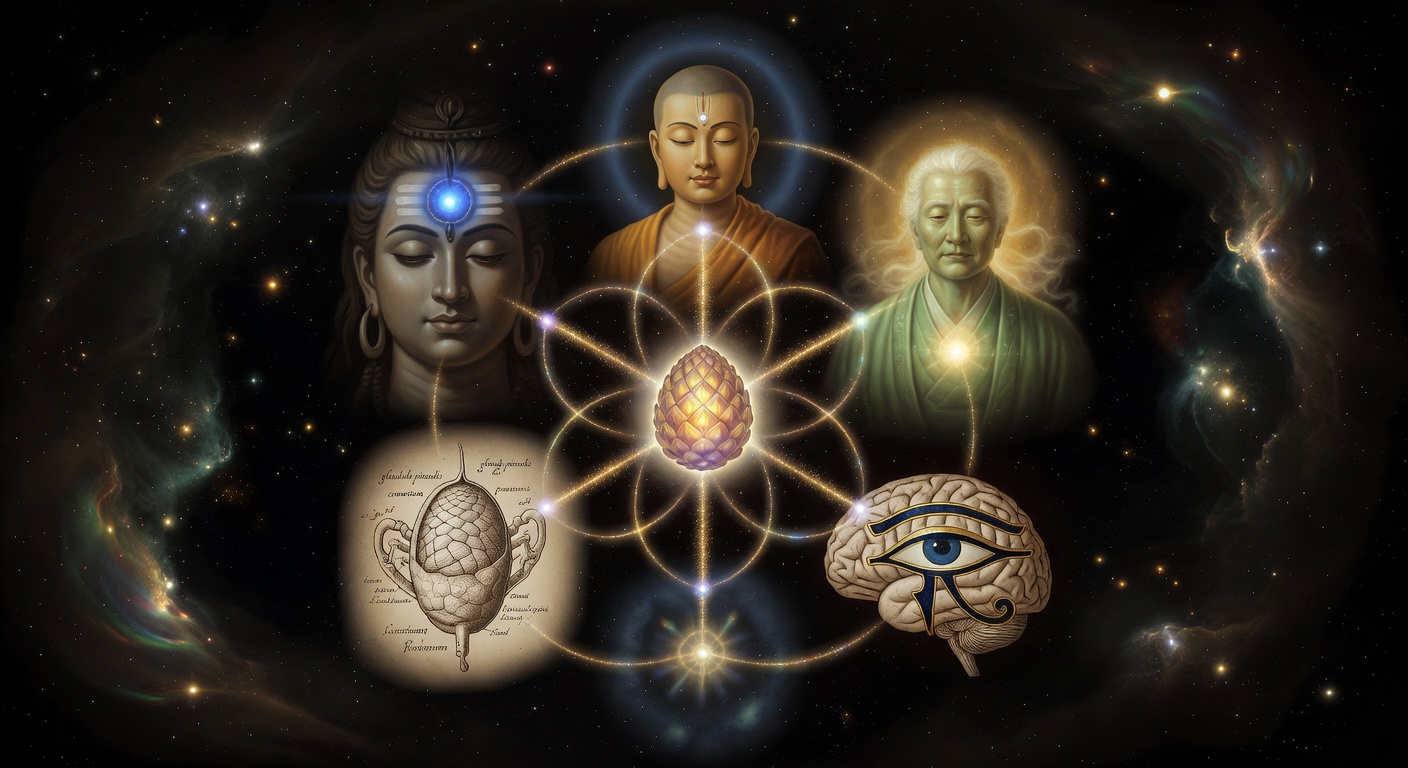
The Cross-Cultural Pattern
Five Traditions, One Brain Region
The same brain region has been independently identified as the seat of inner vision by traditions that had no contact with each other:
India · Hindu
Ajna Chakra
The sixth chakra, the “command wheel,” located between the eyebrows. Activation through yoga and meditation is associated with clairvoyance, inner vision, and direct perception of subtle realities. Its Sanskrit name means “to perceive” or “to command.”
Tibet · Buddhist
The Urna
The tuft or dot between the Buddha’s eyebrows, representing wisdom vision. In Tibetan Buddhism, the brow center is the seat of luminous awareness — the “clear light” that manifests at the moment of death and in deep meditation.
China · Taoist
Upper Dantian
The “upper elixir field” at the brow center is the highest of the three energy centers in Taoist internal alchemy. Cultivating it through neidan practice is said to open spiritual perception and allow the practitioner to “see the Tao.”
Egypt · Ancient
The Eye of Horus
The Wadjet eye has been interpreted by modern anatomists as a stylized cross-section of the thalamic-pineal region. Whether the Egyptians intended this correspondence or whether it is a modern projection is debated — but the anatomical match is notable.
France · 17th Century
Descartes — “The Seat of the Soul”
René Descartes, in The Passions of the Soul (1649), identified the pineal as the single point where the immaterial soul interfaces with the material body. His reasoning: it is the only unpaired structure in a bilaterally symmetric brain. Modern neuroscience says he was wrong about the mechanism. But his intuition that the pineal is anatomically anomalous was not baseless.
Five traditions, five frameworks, one brain region. The convergence may reflect a real phenomenological observation — that deep altered states produce an experience that feels localized in the center of the head.
The Modern Problem
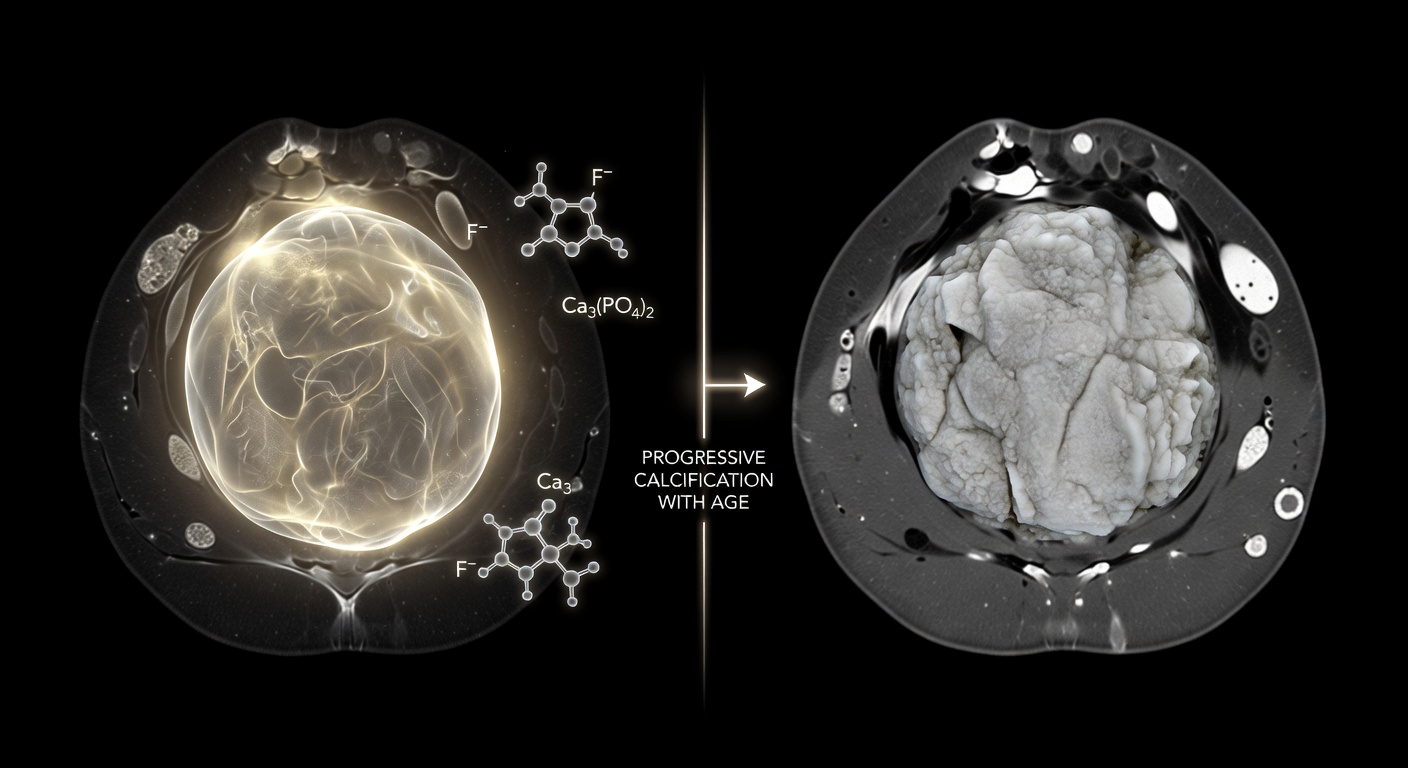
Calcification — Turning to Stone
The pineal gland calcifies with age. Calcium phosphate deposits — called corpora arenacea or “brain sand” — accumulate until, by late adulthood, most human pineals are partially mineralized. They show up on brain CT scans as bright white spots.
Jennifer Luke’s doctoral research at the University of Surrey (1997–2001) demonstrated something striking: the pineal accumulates fluoride from drinking water at higher concentrations than any other soft tissue in the body — reaching levels comparable to bones and teeth. Calcification correlates with fluoride exposure. This is published, peer-reviewed research, not a conspiracy theory.
Whether calcification reduces the gland’s function beyond melatonin production is unknown. No controlled study has demonstrated that a calcified pineal produces less mystical experience than a healthy one. But the question of whether modern environmental factors — fluoride, diet, electromagnetic exposure — are progressively impairing an organ whose full function we don’t yet understand is legitimate.
The Honest Position
What We Can Actually Say
The pineal’s evolutionary ancestry as a photoreceptor is proven. It was an eye. DMT in the pineal of living mammals is confirmed (2013 rat study). A DMT surge at the moment of death is confirmed in rats (Dean et al., 2019). Fluoride accumulation in the pineal is confirmed (Luke, 2001). The cross-cultural convergence on the brow center as the seat of inner vision is documented across at least five independent traditions.
What is not confirmed: that the pineal produces enough DMT for psychedelic effects in living humans, that the death-surge DMT comes specifically from the pineal rather than from distributed brain tissue, or that calcification measurably reduces spiritual experience. Strassman’s hypothesis is evolving — the 2019 cortex findings suggest DMT is a whole-brain phenomenon, not pineal-exclusive — but it has not been refuted.
Our working position: a vestigial eye buried at the centre of the brain, producing psychedelic compounds, calcifying under modern chemical exposure, and identified by every major mystical tradition as the organ of inner vision — that deserves more attention than “it just makes melatonin.” The Spirit Molecule hypothesis is unproven. But the organ it points to is genuinely strange, and the questions it raises are real.
Sources & Further Reading
- Rick Strassman — "DMT: The Spirit Molecule" (2001) — the original pineal/DMT hypothesis and clinical research
- Jennifer Luke — "Fluoride Deposition in the Aged Human Pineal Gland" (Caries Research, 2001) — peer-reviewed study on fluoride accumulation
- René Descartes — "The Passions of the Soul" (1649) — the philosophical case for the pineal as seat of the soul
- Barker et al. — "LC/MS/MS analysis of DMT in rat pineal gland" (Biomedical Chromatography, 2013) — first in-vivo detection of pineal DMT
- Dean et al. — "Biosynthesis and Extracellular Concentrations of DMT in the Rat Brain" (Scientific Reports, 2019) — DMT surge at cardiac arrest and cortex synthesis
The Quiet Science
Reincarnation — The Evidence
For sixty years a serious, methodical research program has been quietly logging cases of children who remember lives that aren’t theirs. The mainstream press doesn’t cover it. The University of Virginia files exist anyway.

1961 — The Founding
Ian Stevenson and the UVA Files
In 1961, Ian Stevenson, then chairman of the Department of Psychiatry at the University of Virginia School of Medicine, started doing something his colleagues considered intellectually disreputable. He started taking children seriously when they spontaneously reported memories of a previous life. Not as a believer. As a clinician collecting data.
Over six decades the program he founded — now the Division of Perceptual Studies at UVA — built a database of approximately 2,500 documented cases. Each case followed the same methodical pattern: a child between two and seven, spontaneous memories with verifiable detail (names, places, manner of death), independent investigation by Stevenson or a colleague who travelled to interview both families. The program is the longest continuous study of its kind in the world.

The Pattern
What the Cases Look Like
The strongest cases follow a remarkably consistent shape. Around age two or three, a child begins talking about a different family, a different home, a different name — sometimes a different country. They use specific verifiable details: a village they have never been to, the names of people they have never met, a manner of death (often violent) that the family they are born into has no connection to. They often stop talking about it by age seven or eight.
In the cases Stevenson considered evidential, the previous person was eventually identified, the child’s statements were checked against the dead person’s actual life, and a high percentage of the verifiable claims turned out to be correct. Stevenson rated cases on multiple dimensions of strength — was it documented before verification? Did the child recognize people? Did they show emotional behavior consistent with the previous personality? — and built a graded database, not a collection of anecdotes.
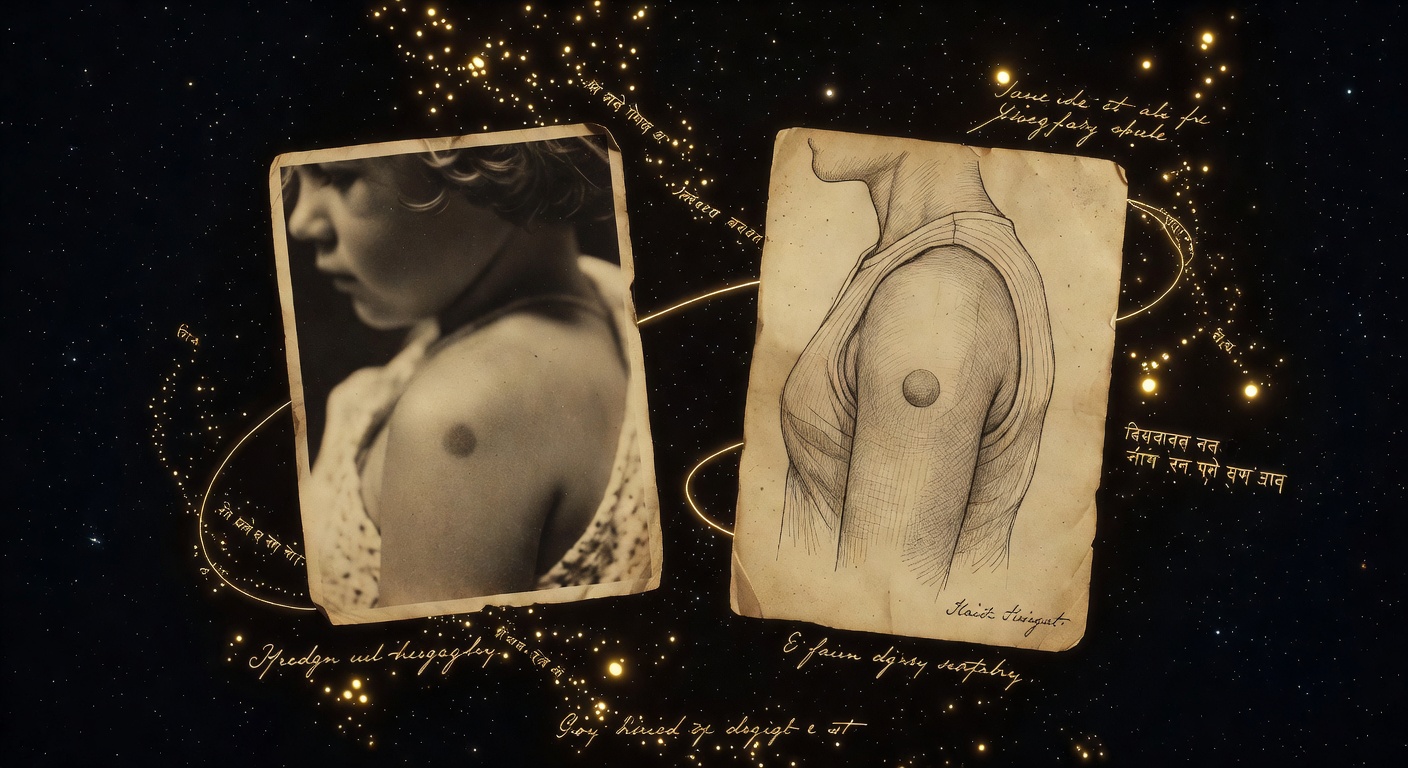
Stevenson’s Strongest Finding
Birthmarks That Match Old Wounds
In the late 1990s, after thirty years of fieldwork, Stevenson published Reincarnation and Biology — a 2,268-page two-volume work documenting more than 200 cases in which a child was born with a birthmark or birth defect that closely matched the location and shape of an injury on the body of the previous personality they claimed to remember.
In several of the strongest cases, autopsy reports or medical records of the deceased existed independently. Stevenson would obtain those records from the previous person’s family, then photograph the child’s birthmark, then compare. He treated this as his most evidential class of case — physical evidence on a living body that correlates with documented physical history of a dead person the child had never met. Stevenson considered the birthmark cases the closest he ever got to something approaching proof.
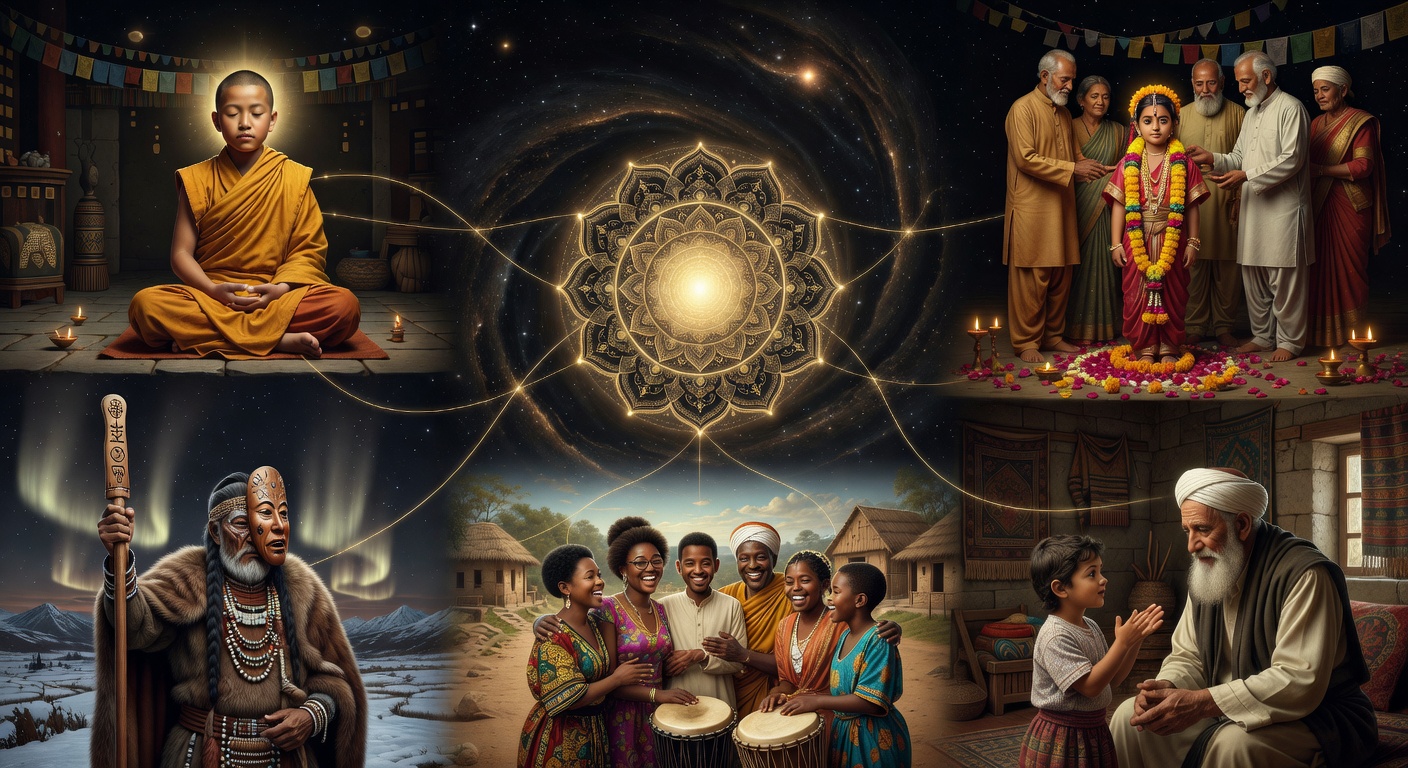
The Cross-Cultural Pattern
Cultures That Never Met, Same Phenomenon
Reincarnation belief is not unique to Hinduism and Buddhism. The strongest spontaneous cases show up in cultures that had no contact with each other and that handle the phenomenon in their own way:
Tibet · Buddhist
Tulku Recognition
Children identified as the rebirth of a senior lama through a recognition ritual. They are tested on personal possessions of the deceased lama. The system has run for centuries.
Lebanon/Syria · Druze
Spontaneous Recall
The Druze hold reincarnation as core doctrine and treat children’s past-life statements as expected. Stevenson considered Druze cases among his strongest because the cultural support produces unusually detailed reports.
Alaska/Northwest · Tlingit
Returning Ancestors
Tlingit and other Northwest Coast peoples expect ancestors to return through the family. Cases have been documented going back to the early twentieth century, separately from the Asian record.
India · Hindu
The Largest Source
Most of Stevenson’s 2,500 cases come from India and Sri Lanka, where families take a child’s claims seriously enough to investigate rather than suppress. This is sample bias and Stevenson said so — not because the phenomenon doesn’t exist elsewhere.
West Africa · Yoruba
Returning Children
The concept of abiku — children who return through the same family across deaths. Names like “Babatunde” (father has returned) literally encode the belief in the naming convention.
United States · Modern
Tucker’s American Cases
Jim Tucker, who inherited the program from Stevenson, has been documenting American cases since the 2000s. Same pattern, same age range, despite American culture actively discouraging the topic. The James Leininger case (a child with detailed memories of a WWII Navy pilot) is the most-documented.
Six cultures, six theological frames, one underlying phenomenon: small children producing verifiable memories of lives that ended before they were born.
Tucker’s Continuation
Jim Tucker and the New Generation
Jim Tucker, MD, a child psychiatrist at UVA, took over the program after Stevenson’s death in 2007. Tucker’s contribution has been to extend the work to American children, where the cultural assumption is that reincarnation cases shouldn’t exist. They exist anyway.
Tucker’s book Return to Life (2013) documents the strongest American cases — James Leininger, a Louisiana toddler who at age two began reporting detailed memories of being a WWII Navy pilot named James Huston shot down at Iwo Jima. The boy named the aircraft carrier (USS Natoma Bay), the names of fellow pilots, and specific details of the crash. All independently verifiable, all checked against Navy records. None of it was knowable through normal means.
Tucker frames the phenomenon in the language of information physics rather than spiritual doctrine: the brain may not generate consciousness so much as it filters and localizes a more fundamental field of mind. If consciousness is non-local, persistence after death is at least conceivable. The cases are the data; the framework is provisional.
The Honest Position
What We Can Actually Say
Reincarnation is not proven. Stevenson never claimed it was. The phenomenon he documented — small children producing apparently verifiable memories of dead strangers — is real, well-recorded, and unexplained. The honest debate is about interpretation, not existence. Coincidence? Cryptomnesia? Cultural priming by relatives? Some kind of telepathy between the child and family members of the deceased? Actual continuity of consciousness? Each is on the table. None has been killed by the data, and at least one fits all the data.
What is settled is that the program exists, the files exist, the methodology was careful, the strongest cases survived hostile re-examination, and mainstream psychiatry has chosen to ignore rather than refute. Stevenson published in peer-reviewed journals (Journal of Nervous and Mental Disease, Journal of Scientific Exploration). The 2,500-case database is open for any qualified researcher to examine. Almost nobody does.
Our working position: a Canadian-trained psychiatrist who chaired a department at one of the oldest medical schools in the US spent forty-five years building a careful, peer-reviewed record for a phenomenon mainstream science says cannot exist. The evidence isn’t hidden. It’s in the UVA library. It’s just not discussed.
Sources & Further Reading
- Ian Stevenson — "Twenty Cases Suggestive of Reincarnation" (1966) — the foundational study that launched sixty years of research
- UVA Division of Perceptual Studies — the ongoing research program with 2,500+ documented cases
- Jim Tucker — "Return to Life" (2013) — American reincarnation cases including James Leininger
- James Leininger case — Wikipedia — the most-documented American past-life memory case
- Reincarnation research — Wikipedia — overview of academic investigation into past-life memories
Cosmic Memory
The Akashic Records
The same idea keeps surfacing across six traditions and then again in modern information physics. Nobody has proven any of it — but nobody has explained away the pattern either.
The Ancient Root
Akasha — The Fifth Element
In Samkhya and Vedanta philosophy, akasha is one of the five mahabhutas — the great elements that compose reality. Earth, water, fire, and air are the familiar four. Akasha is the fifth: subtle space, the medium that contains the others, sometimes translated as "ether." The Taittiriya Upanishad says all beings arise from akasha and return to it.
This is genuinely ancient thought — not a 19th-century invention. The Vedic idea that space itself has structure and holds information is already there in texts that predate Theosophy by two and a half thousand years. The modern concept is a reinterpretation, not an original insight.
1875 — The Reframe
Blavatsky’s Cosmic Memory Bank
Helena Blavatsky, co-founder of the Theosophical Society, borrowed the Sanskrit akasha and bolted on a new idea: that this subtle space is also a kind of cosmic memory — a record of every thought, action, and event since the beginning of time. Charles Leadbeater, Alice Bailey, and Rudolf Steiner expanded the concept. Edgar Cayce built his entire career on claiming to read them in trance.
This is where the "records" language comes from, and also where the concept got muddied by showmanship. Most modern "Akashic readers" are selling something. But the underlying question Blavatsky raised — whether information itself is a conserved quantity of the universe — turned out to be a serious physics question a century later.
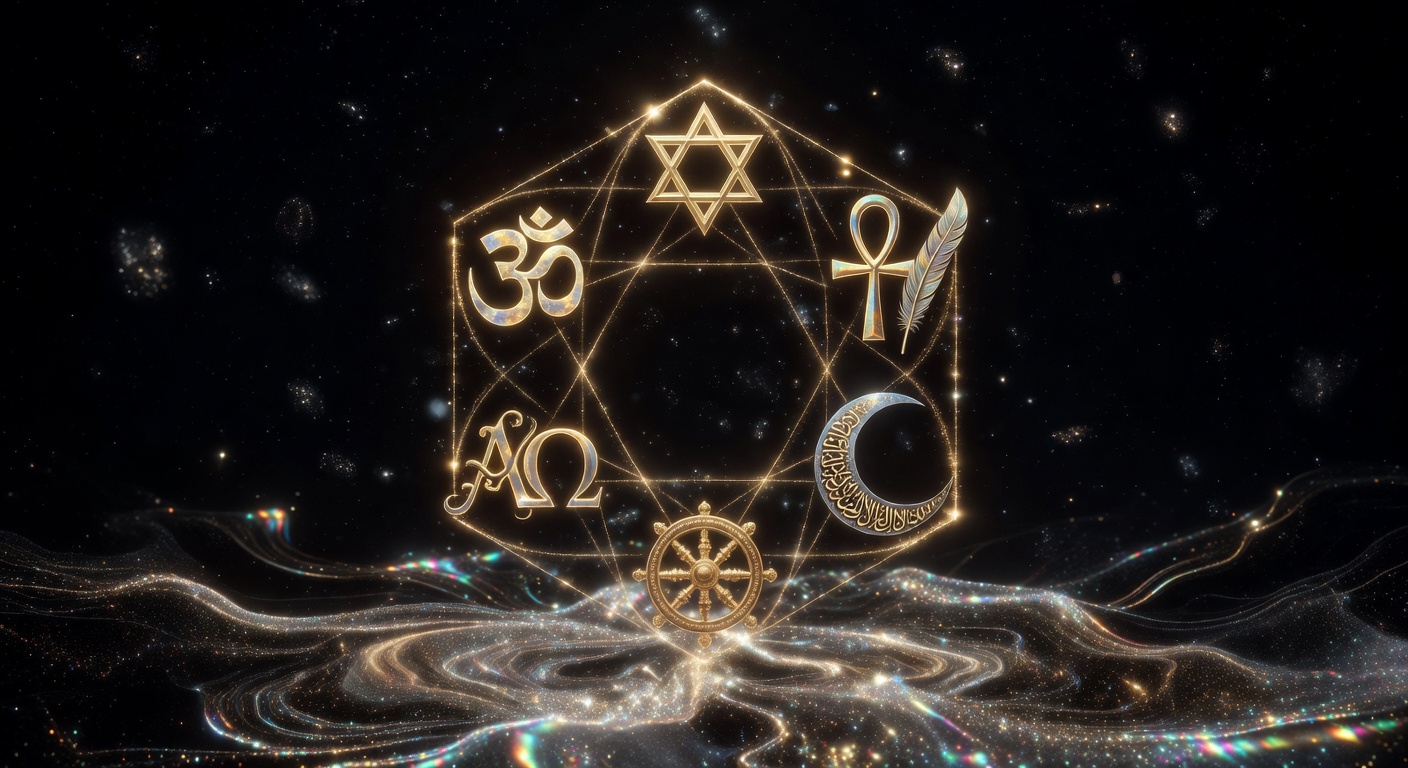
The Convergence
Six Traditions, One Idea
The concept of a cosmic record of all events is not unique to Theosophy. It shows up independently across cultures that had no contact with each other, long before Blavatsky wrote a word:
Buddhism · Yogacara
Alaya-vijnana
The "storehouse consciousness" — a substrate beneath individual awareness that holds karmic seeds from every action. Asanga formalized this in the 4th century CE.
Christianity · Revelation 20:12
The Book of Life
"And the books were opened, and another book was opened, which is the book of life; and the dead were judged out of those things which were written in the books." Psalms 139:16 names it too.
Islam · Quran 85:22
Al-Lawh al-Mahfuz
The "Preserved Tablet" — a cosmic record containing everything that was, is, and will be. In some traditions, it exists before the creation of the physical world.
Egypt · Thoth
The Hall of Records
Thoth as scribe of the gods, keeper of the ledger of every soul. The weighing of the heart against Ma’at’s feather is a reading from this record.
Judaism · Kabbalah
The Book of Raziel
A celestial text containing all knowledge of the universe, given to Adam by the angel Raziel. The Zohar describes the upper worlds as layers of written and recorded reality.
Hinduism · Vedanta
Chitta and Akasha
Patanjali’s Yoga Sutras (3.18) describe a yogic siddhi of reading past-life impressions stored in the chitta (mental substance), which is itself a form of akasha.
Six cultures, six terminologies, one underlying claim: reality is recording itself.

The Rediscovery
Information Physics Catches Up
Starting in the 1970s, physics began treating information as a fundamental quantity of the universe rather than an abstraction. The parallels with the Akashic concept started writing themselves:
- The holographic principle (Bekenstein, 't Hooft, Susskind) — every region of space has a maximum information content proportional to its boundary area, not its volume. Every part of a hologram contains the whole. Mainstream theoretical physics now.
- Bohm’s implicate order — information enfolded in a deeper structure beneath the visible "explicate" world, unfolding into what we experience as separate things. Bohm spent decades mapping it to the Upanishads.
- Wheeler’s "It from Bit" — John Archibald Wheeler’s proposal that physical reality is fundamentally informational, that every particle, field, and spacetime event derives from yes/no answers to questions. Information is not about reality; information is reality. We go deep on this one — Leibniz, Wheeler, Tegmark, the holographic principle — in the information-as-substrate pattern exploration.
- Ervin Laszlo’s Akashic Field — the most direct attempt to unify the concept with physics. Laszlo maps the quantum vacuum / zero-point field onto the Akashic concept. His work is speculative but takes the question seriously.
None of these frameworks say "the Akashic Records are real." But they all assert that information is preserved at the deepest level of reality — which is the same structural claim Blavatsky made, and the same claim that six older traditions made before her.
Bohm and the Upanishads was not a one-off
Bohm and the Upanishads is the visible case. Bohr, Schrödinger, Pauli, Zeilinger all sat with the same Eastern material. A century-long conversation, mapped.
Rabbit hole detected
Deep dive →
The Data Point
The Life Review
In near-death experience research, one of the most consistently reported phenomena across cultures is the "life review" — a rapid, panoramic recall of every event in the subject’s life, sometimes experienced simultaneously from their own and others’ perspectives. Pim van Lommel (2001, The Lancet), Bruce Greyson, and Sam Parnia (AWARE study) have documented hundreds of cases.
What makes it interesting is that the subjects are flatlined. Zero brain activity. The standard neurological model says memory retrieval should be impossible, let alone a complete compressed replay. And yet the phenomenon is consistent and well-documented. Nobody has a good mechanism for it.
A life review doesn’t prove the Akashic concept. But it does mean there is at least one verified phenomenon in which a conscious being appears to access a complete record of their experience without using their brain to store it. That is the closest thing to a data point we have for anything like what Blavatsky described.
The Honest Position
What We Actually Know
Nobody has proven that a literal cosmic record of every event exists in the sense Blavatsky described. The Edgar Cayce prophecies are mostly unverified. Anyone selling "Akashic readings" should be assumed to be selling something.
But three things are true at once. First, the concept shows up independently in at least six major traditions — Vedic, Buddhist, Christian, Islamic, Egyptian, Kabbalistic — most of which had no contact. Second, modern information physics keeps producing frameworks (holographic principle, implicate order, it-from-bit) that are structurally identical to the old claim. Third, the NDE life-review phenomenon is documented and unexplained.
Our working position: the Akashic Records as described by trance channelers are almost certainly not real. The underlying idea — that information is conserved at the deepest level of reality — is plausible, takes different forms across six traditions, and keeps showing up in physics. That’s not proof. It isn’t nothing either.
Sources & Further Reading
- Pim van Lommel et al. — "Near-death experience in survivors of cardiac arrest" (The Lancet, 2001) — landmark prospective NDE study
- Sam Parnia — AWARE Study (2014) — the largest clinical study of near-death experiences during cardiac arrest
- Ervin Laszlo — "Science and the Akashic Field" (2004) — attempt to map the quantum vacuum onto the Akashic concept
- The Holographic Principle — Wikipedia — Bekenstein, 't Hooft, and Susskind's information-theoretic framework
- The Emerald Tablet — Wikipedia — the Hermetic source text for "As Above, So Below"
The Hermetic Principle
As Above, So Below
This line from the Emerald Tablet is not primarily about astronomy. It is about the relationship between a higher-dimensional reality and the 3D/4D spacetime we perceive. The ancients understood what shows up in the physical world as a reflection of patterns operating a level up.
The long cycles on this site — precession, the yugas, the Maya count — may be the visible signatures of those deeper processes. The material world is the surface. The real mechanics run in dimensions physics is only starting to theorise about.
The ancients encoded that understanding in their monuments, their mathematics, and their myths. We are slowly figuring out what they meant.
This is the rabbit hole. The deeper you go, the clearer it gets: the ancients weren’t primitive. They knew things the modern world forgot. And we’re only now starting to remember.